System hub

An indoor cannabis grow system works when every stage belongs to one plan.

An indoor cannabis grow system is easier to run when the enclosure, root zone, flowering rhythm, harvest timing, drying process, and cure strategy are designed as one connected workflow. That is the system ColaXpress is built to teach.

The point is not to shrink a large-room grow until it barely fits. The point is to build a smaller operating system that stays easier to read, easier to correct, and harder to let drift off course.

Reference model VGrow Smart Box paired with a DWC kit
Method fit 12/12 from seed for a cleaner compact rhythm
Finish logic Harvest, dry, and cure planned from the start
System logic

Compact grows improve when every major decision makes the next one easier.

The enclosure affects the environment. The environment affects how reliably the plant expresses itself. The root zone affects how easy it is to read feed and stress. The flowering method affects structure. The finish plan affects whether the harvest actually lands well. None of those are side topics, and none of them stay politely contained once they drift.

That is why ColaXpress treats the grow as one chain instead of a stack of isolated pages. If the room is noisy, the plant is harder to read. If the method is too large for the cabinet, the space starts lying. If the finish is unplanned, the whole system cashes out badly at the end. The system works because the decisions reinforce each other.

Readers who want the practical build order should pair this page with the compact grow setup checklist. Readers who want to understand why the root zone behaves so differently should start with what is DWC for the short definition, go next to DWC basics for beginners, then compare DWC vs soil for small cannabis grows if the method choice is still unsettled.
Field note

A smaller setup should create less confusion, not just less square footage.

  • Contained room
  • Readable root zone
  • Structured finish plan
Flagship path

The VGrow plus DWC pairing is the reference model because each part makes the next part easier to trust.

ColaXpress uses the VGrow Smart Box and matching DWC kit as its flagship example because the pairing keeps the environment contained and the root zone direct. Light, airflow, odor, feeding, and plant response all become easier to read when they are not scattered across a looser setup with more room for denial.

The broader philosophy behind that choice lives in craft cannabis cultivation. The short version is that this system is built for readable flower and a protected finish, not for squeezing a max-weight agenda into a cabinet and calling the stress "performance."

A

Contained environment

The cabinet keeps the room from turning into an uncontrolled argument between heat, smell, and improvisation.

B

Direct root-zone feedback

DWC gives the grower a clearer relationship with feeding, oxygenation, and plant response. It tells the truth quickly.

C

Cleaner beginner decisions

The real advantage is not novelty. It is that there are fewer places for weak process to hide.

The flagship path is not just a shopping list. The cabinet contains the environment, the DWC setup sharpens feedback, the 12/12 from seed method keeps the plant aligned with the room, and the finish pages make sure the harvest does not undo all that earlier discipline. When one piece stops fitting, the rest of the system gets noisier fast.

Readers who want the product-specific version of that logic should go next to the Vivosun VGrow DWC guide. That page explains the same stack as an actual workflow instead of leaving it as a bundle description.

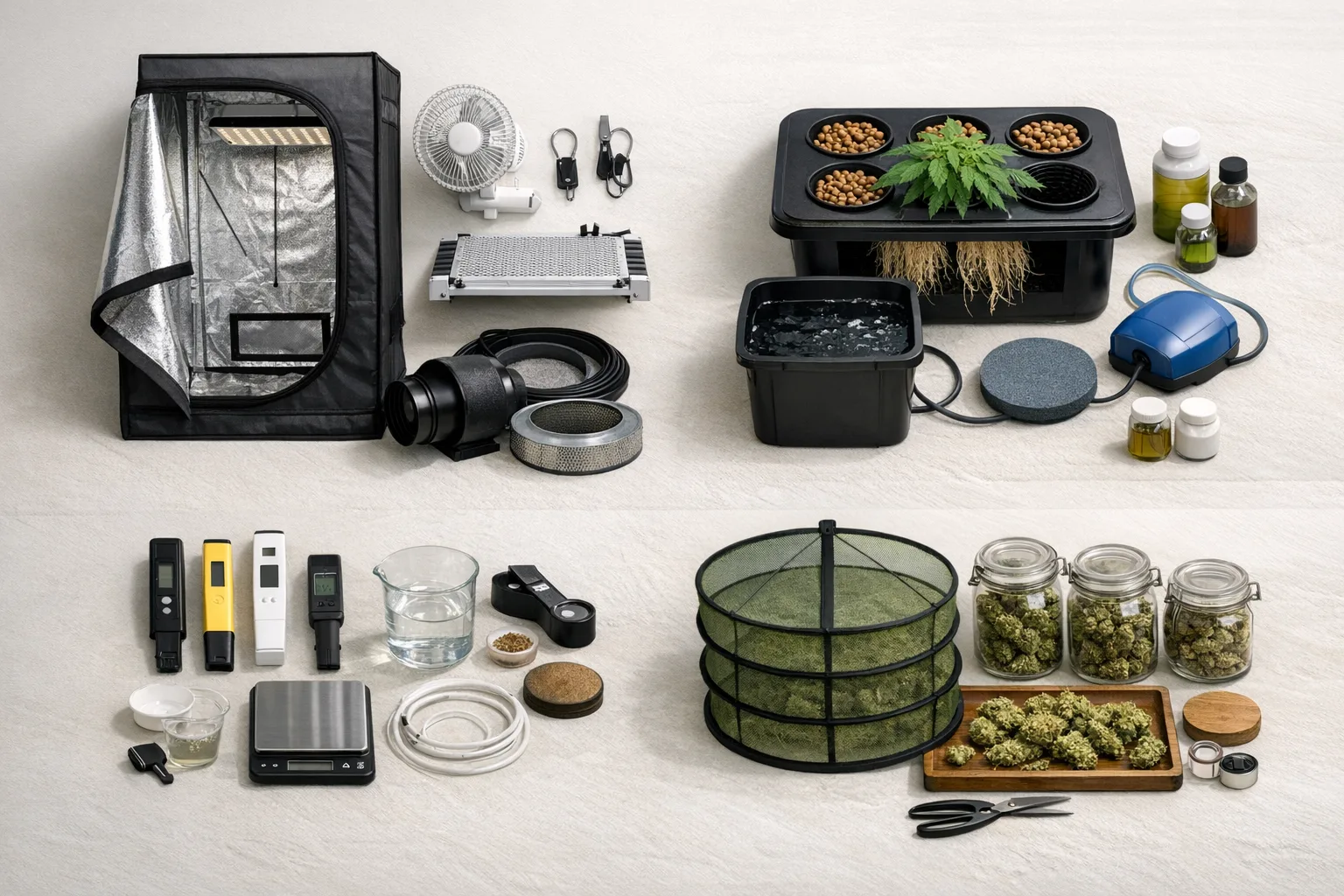
Compact cannabis grow system map showing enclosure, DWC roots, daily checks, harvest timing, drying, and curing as one connected workflow.
The system works when each stage makes the next one easier to read.
System map

Each part of the workflow controls something, affects something else, and fails in a predictable way when it drifts.

Room

Enclosure

The cabinet controls airflow, odor, and the overall readability of the environment. When it drifts, every later decision gets noisier.

Roots

Root zone

The DWC setup controls how quickly the plant reflects feed and oxygen changes. When it drifts, stress becomes harder to interpret cleanly, which is why root problems in DWC deserves its own troubleshooting layer.

Method

Plant structure

The flowering rhythm controls how large and unruly the plant tries to become. When it drifts, the cabinet starts feeling smaller than it really is.

Finish

Final quality

Harvest, drying, and curing control whether the run actually lands. When they drift, the best parts of the grow get spent on recovery instead of refinement.

Exact-answer layer

These are the compact follow-up pages that keep one problem from muddying the whole system.

The big system page should stay broad, but the answer pages below need more than a passing mention. They are the cleanest routes for readers who already know the failure mode and just need the right correction without bouncing through the whole library again.

Roots

DWC definition, basics, and failures

Use the short definition first, then the beginner hydro layer, then the root troubleshooting page when the reservoir stops feeling readable.

What is DWC? DWC basics Root problems in DWC
Method

Know when the compact method still fits

These two pages handle the main method decision: why 12/12 works in a cabinet, and when the same method becomes the wrong trade.

12/12 from seed When 12/12 is a bad idea
Why compact works

The less room you have, the more the system needs to stay disciplined.

Small spaces punish contradiction quickly. A modest cabinet paired with a clean method feels controlled. The same cabinet paired with a sprawling plan starts feeling like the room is being asked to lie on your behalf.

Readers who want the craft-first version of that small-space logic in one place should go next to compact craft cannabis grow. That page explains why smaller rooms can actually become one of the best places to protect quality when the method and finish stay in scale with the enclosure.

If the room choice itself is still fuzzy, start with cabinet grow vs grow tent. If the apartment itself is the pressure point, go next to compact cannabis grow setup for apartments before you widen the enclosure or the plant. If the main concern is keeping odor drift from becoming a nuisance, move to low odor cannabis grow setup before treating the issue like a bigger-fan problem. If the cabinet already exists but keeps feeling heavy or wet, go straight to humidity problems in a grow cabinet before buying more hardware. If the same problem shows up in the narrower tent phrasing, use how to lower humidity in a small grow tent as the cleaner quick-answer route. If the setup feels structurally fine but momentum is still flat, continue to why growth is slow in a compact setup before stacking random corrections. If the room and method make sense but the cultivar choice still feels vague, use best cannabis strains for small spaces as the trait-level fit check before a name or mood board takes over the decision.

Room Contain the variables

Smaller spaces become easier when heat, odor, and airflow are not constantly leaking into a larger environment.

Plant Keep structure honest

A compact plant in a compact room is a conversation. A sprawling plant in a compact room is an argument.

Grower Reduce false choices

The system should remove unnecessary decisions, not flood a beginner with more knobs to touch.

Finish Plan the jar early

A small setup only feels complete when the final stage is already part of the design.

Who this fits

This system is strongest for growers who want clarity more than spectacle.

  • Beginners who want fewer moving parts in the room.
  • Cabinet growers working with limited height and limited patience for chaos.
  • People who would rather understand one compact workflow deeply than collect scattered grow tips.
  • Growers willing to think about harvest, drying, and curing before the plant demands it.
Who it does not fit

This is a weaker fit for growers chasing giant canopies or maximum improvisation.

  • Readers who want a large, long-veg plant in a small cabinet.
  • Training-heavy growers who enjoy a more sprawling canopy-management style.
  • Anyone expecting compact methods to produce big-room outcomes without tradeoffs.
  • People who want to postpone finish-stage decisions until the last minute.
What this assumes

The system assumes you want a setup that is disciplined, not decorative.

  • You are willing to monitor pH, EC, humidity, and general room behavior instead of guessing from vibes.
  • You are willing to trade raw plant size for cleaner control.
  • You want the environment and the method to agree with each other.
  • You want the finish treated as part of the build, not as an afterthought.
What this prevents

The system exists to remove the beginner contradictions that make compact grows harder than they should be.

  • Buying gear before understanding the workflow.
  • Running a cabinet with a method that belongs in a larger room.
  • Overcomplicating the root zone before learning how to read it.
  • Growing cleanly and then improvising badly once harvest gets close.
Method fit

12/12 from seed keeps the system compact in spirit as well as in footprint.

A contained cabinet works best when the plant is not trying to behave like it belongs in a much larger room. That is why ColaXpress leans toward 12/12 from seed. The plant stays smaller, the structure stays cleaner, and the grower avoids some of the training theater that usually complicates first runs.

The point is not that 12/12 is magically superior. The point is that it fits the room. A compact system gets stronger when the method respects the footprint instead of trying to overpower it. When that fit starts breaking, the clean counterweight is when 12/12 from seed is a bad idea.

The same logic applies to plant choice. A disciplined cabinet gets easier to run when the cultivar keeps the canopy believable, which is why best cannabis strains for small spaces focuses on stretch, branch width, and finish load instead of generic strain-name hype.

Tradeoff

The method is not about chasing maximum size. It is about trading size for clarity.

That trade makes sense in a small space. The plant is easier to manage, the room stays more believable, and the system stops pretending it can do everything at once. If the reader wants a bigger-picture method breakdown, the dedicated 12/12 page should carry that depth while this page carries the system logic that explains why it belongs here.

Read the full 12/12 guide

Equipment fit

After the cabinet and the root-zone method, the best tools are the ones that make the room more readable.

1

Measurement first

pH, EC, humidity, and finish-stage inspection tools matter because they sharpen decisions later in the run.

2

Buy for clarity

The best equipment earns its place by helping the grower read the room, the reservoir, or the finish more cleanly.

3

Skip the gadget pile

The setup should not become impressive by getting crowded. It should become easier by getting cleaner.

That is why the equipment side of ColaXpress keeps pointing readers back to essentials first. The buying flow works best in this order: learn what to buy first, understand how the DWC root zone behaves, then use the full equipment guide to decide what is required, what is helpful, and what is just shiny.

Access

The financing conversation belongs in the system because access changes whether the system is real.

A good setup is not especially useful if it never moves beyond a saved tab. ColaXpress keeps financing visible because for many beginners it shapes whether a clean first build is actually reachable. Access is not separate from the workflow. It decides whether the workflow exists outside the browser.

Trust

Product guidance is useful only if it stays grounded.

The flagship path is presented as the app's cleanest reference model, not as a magical universal answer. The point is to teach the logic behind the system and keep product claims disciplined. Readers who need boundaries around health, legality, or purchasing questions should continue into the FAQ and the About page.

Finish plan

Harvest, drying, and curing are part of the original design, not a cleanup phase after the fact.

A lot of otherwise good flower loses quality because the grower treats the finish like a final errand instead of part of the system itself. ColaXpress treats it differently: inspect trichomes honestly, dry with restraint, and cure like the final jar is where the whole run gets judged.

Harvest Read trichomes, pistils, and ripeness signals without rushing the call.
Dry Control airflow and moisture loss instead of forcing the room to finish faster.
Cure Move to jars at the right time and let the process settle down instead of getting louder.

In practical terms, the finish chain works like this: a clean harvest call makes drying easier to trust, a clean dry makes the jar handoff easier to read, and a clean cure lets the whole run settle into something worth keeping. That is why the right next reads here are harvest ripeness, buds ready for jars, and how to cure cannabis after drying.

What beginners usually break

The system slips when one part starts pretending it can ignore the others.

  • Buying around anxiety instead of building around a clean workflow.
  • Trying to run a plant that wants more room than the cabinet can honestly support.
  • Overfeeding because the plant looks small and the grower starts compensating emotionally.
  • Ignoring the finish plan until the plant is already close to chop.
  • Treating each stage like a separate hobby instead of one connected operating system.

When those mistakes show up, the solution is usually not more activity. It is more alignment. Make the room, the root zone, the method, and the finish agree with each other again, and the whole system gets quieter.