Harvest guide

When to harvest cannabis by reading trichomes, plant signals, and timing.

Cannabis harvest timing is best judged by reading trichomes, pistils, and canopy maturity together. Clear trichomes are early, cloudy trichomes often line up with the main harvest window, and amber trichomes signal a later, heavier finish. If you want the shortest definition first, start with what are trichomes and then come back here for the full harvest call.

This is one of those moments where the plant is unusually honest. The hard part is that growers love to interrupt that honesty with wishful thinking.

Clear Usually too early if the goal is mature, fully expressed flower.
Cloudy Often the main harvest window when growers want a brighter, stronger finish.
Amber Later maturity, often linked to a heavier and more sedating finish.
Visual reference

The flower can look ready before the trichomes fully agree, which is why the image is a cue and not the verdict.

Mature structure, curled pistils, and a more settled surface can all suggest that harvest is close. They help the grower know when to inspect seriously, but they do not replace magnification and a clean read across the canopy.

  • Use the overall look of the flower to know when inspection matters most.
  • Let the trichome balance decide whether the plant is early, in the window, or clearly later.
  • Keep the final call tied to what the buds show under magnification, not to how photogenic the cola has become.
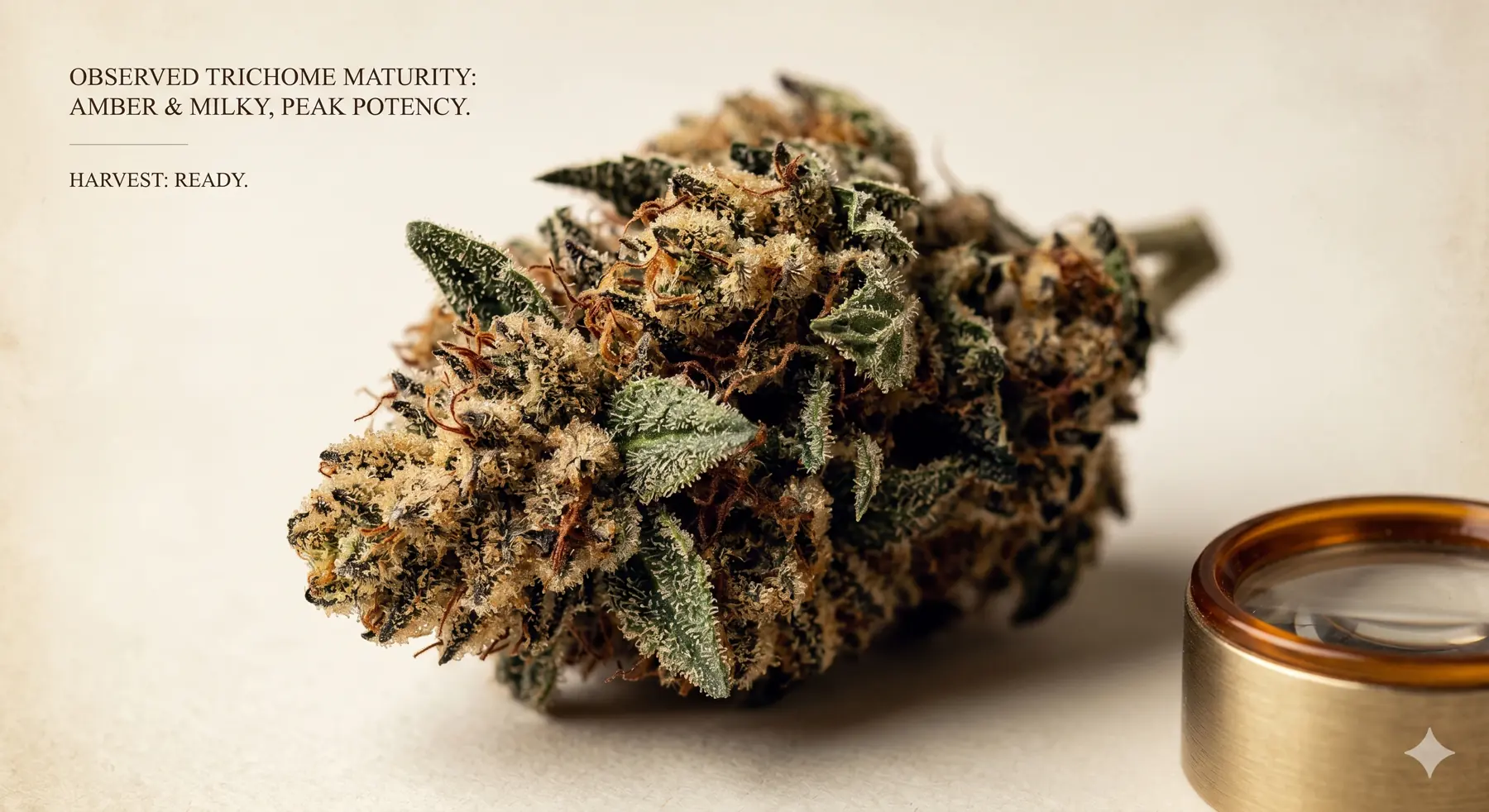
Mature cannabis flower photographed in warm neutral light beside a jeweler's loupe, representing a later harvest-ready window.
Use the overall maturity of the flower as a cue, then confirm the actual harvest window with trichome inspection under neutral light and decent magnification.
Why this matters

Harvest ripeness is not one signal. It is a decision made from the right signals in the right order.

Trichomes are the clearest visual read on flower maturity, but they work best when they are checked on actual buds, compared across the canopy, and read alongside supporting clues like pistils and overall flower development. That is what turns harvest timing from guesswork into a clean call.

Trichome stages

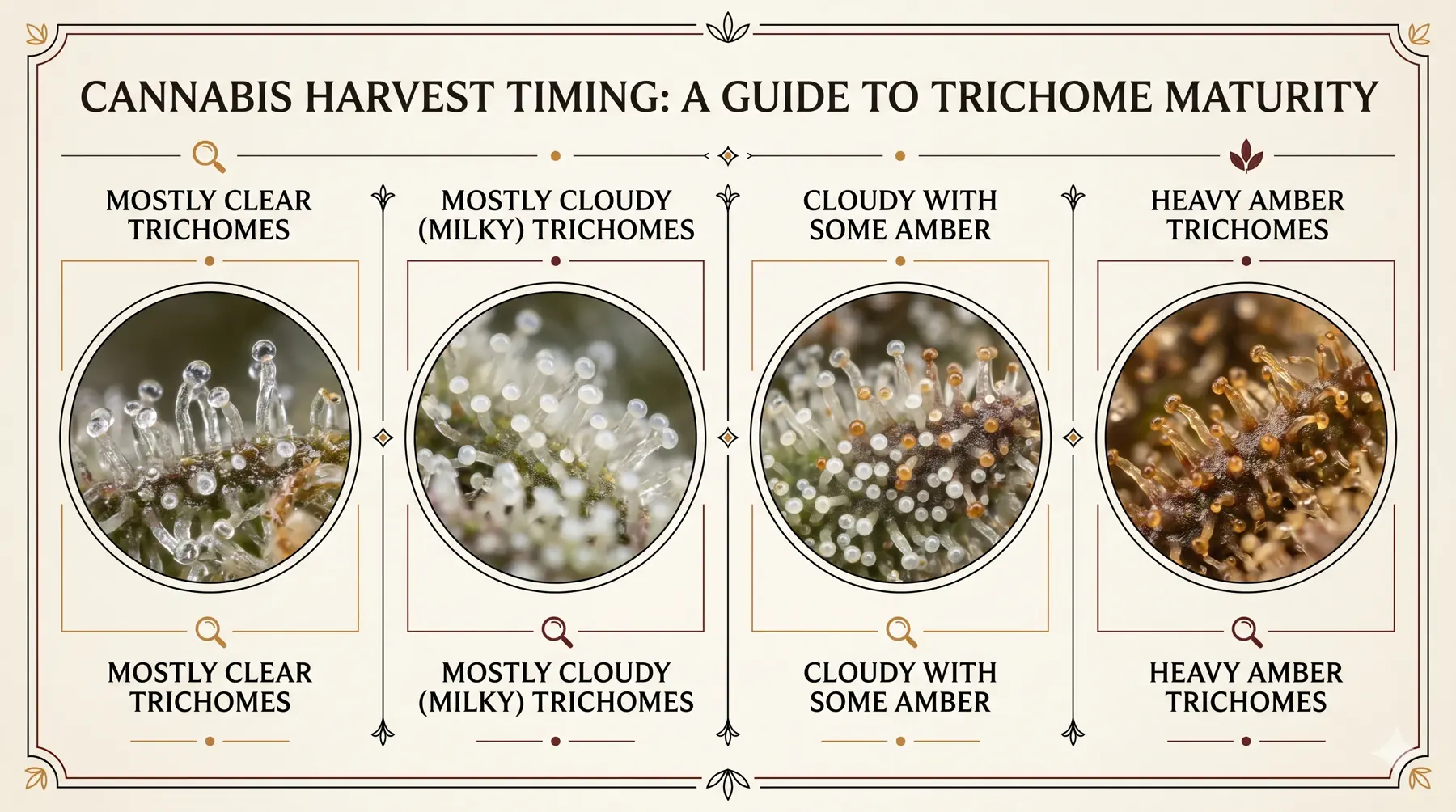
The harvest window gets much easier to read when the stages stay visual.

Harvest timing chart comparing mostly clear, mostly cloudy, cloudy with some amber, and heavy amber trichomes.
Use this chart to train your eye. Mostly clear usually means wait, mostly cloudy often marks the active window, cloudy with some amber leans later, and heavy amber is clearly later.
Where to inspect

Check the flower itself, then compare more than one real bud site.

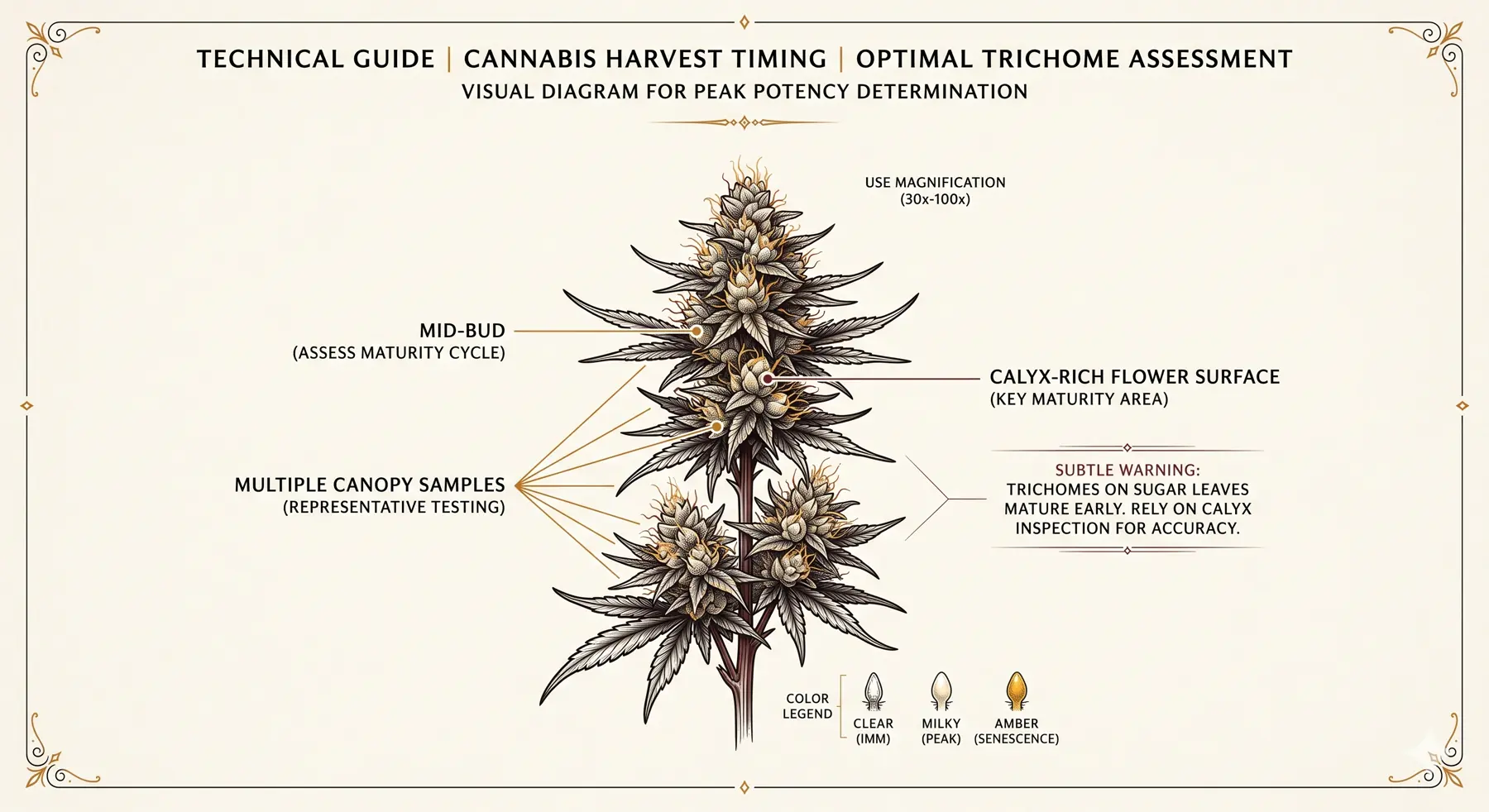
The best read comes from actual bud sites across the plant, not sugar leaves at the edge of the frame. Leaf trichomes often mature faster and can make the whole plant look more finished than it really is.

Focus on calyx-heavy sections of the bud, inspect somewhere around the middle of the flower instead of only the very tip, and compare more than one site before calling the whole plant done. The closer the inspection stays to the real flower, the less the guesswork drifts.

Pistils help too. When a good portion have darkened and curled inward, it is usually time to inspect trichomes more seriously. They are useful context, not the final verdict.

Inspection diagram showing where to inspect trichomes on cannabis buds: mid-bud, calyx-rich flower surfaces, and multiple canopy samples, with a warning not to rely on sugar leaves.
Inspection is more accurate when it stays on calyx-rich flower surfaces, mid-bud sites, and multiple canopy samples instead of relying on sugar leaves alone.
Inspection order

Make the harvest call in a sequence instead of chasing one dramatic clue.

Step 1 Sample several buds

Check top, middle, and lower flower sites because the canopy rarely matures in perfect unison.

Step 2 Read the trichome balance

Look for the overall mix of clear, cloudy, and amber instead of falling in love with one striking head.

Step 3 Use pistils as context

Let pistils confirm that the plant is in the window, but do not let them overrule the buds themselves.

Step 4 Decide whether to cut or wait

Make the call based on the result you want, not because the calendar or your patience suddenly got louder.

Do not rush it

There are a few classic moments when the right move is still to wait.

  • Most of the trichomes are still clear even though the plant looks visually tempting from a distance.
  • Pistils have darkened, but the buds themselves are still reading earlier than the room wants to admit.
  • The breeder timeline says one thing, but the plant under the loupe is still telling a slower story.
  • You are mostly feeling tired of waiting rather than convinced by what the flower is showing.

Harvest regret is usually born in that last category. If the evidence is mixed and the plant is close, a short wait and a cleaner recheck beat a rushed cut almost every time.

Decision guide

Most harvest calls come down to cut now, wait, or recheck in a couple of days.

What you are seeing What it usually means Best next move
Mostly clear trichomes The plant is still early even if it looks tempting from across the room. Wait and recheck in a few days.
Mostly cloudy with little amber The main harvest window is opening for growers who want a brighter, stronger finish. Cut now or watch closely if you want a little more depth.
Cloudy with a noticeable amber mix The window has moved later and the finish is usually leaning heavier. Cut if that matches the effect you want.
Uneven canopy

Top buds and lower buds do not always agree on the schedule.

That does not mean the plant is broken. It means the inspection has to be honest. If the tops are clearly further along while the lower sites are still lagging, read the plant as a canopy with variation instead of pretending one photo settles the whole argument.

Recheck rhythm

When the answer is not obvious, a short wait beats a rushed cut.

If the plant looks close but the trichomes are still mixed in a way that feels uncertain, recheck in two or three days under the same lighting and magnification. Harvest timing gets cleaner when the method stays consistent instead of dramatic.

Quick call

Use this simple read before you make the final harvest move.

Wait

Mostly clear

The plant is still early. Keep watching and recheck in a couple of days under the same lighting.

Watch

Mostly cloudy

You are in the active window. Decide whether the current balance already matches the result you want.

Cut

Cloudy plus amber

The window has moved later. If you want a heavier finish, this is usually where the answer becomes clearer.

Desired effect

Choose the harvest window that fits the result you actually want.

  • Mostly cloudy with little amber usually points toward a brighter, more energetic result.
  • Mostly cloudy with a little amber often feels like the balanced middle ground many growers want.
  • A larger amber presence usually leans toward a heavier, more sedating finish.
What beginners misread

The usual mistake is not ignorance. It is impatience in nicer clothes.

  • Checking sugar leaves instead of the buds that actually matter.
  • Trusting one top cola instead of sampling several sites across the plant.
  • Confusing "almost ready" with "good enough."
  • Letting pistils make the whole decision while trichomes are still arguing.
Loupe

Use real magnification

A jeweler's loupe or macro lens is the difference between reading the plant and narrating a blur.

Light

Use neutral lighting

Grow lights can flatter the plant in all the wrong ways. Neutral light tells fewer lies.

Canopy

Check more than one spot

Lower buds often mature later, so a whole-plant harvest call needs more than one heroic close-up.

Handoff

The harvest call should already be thinking about drying and curing.

A cleaner harvest decision makes the next stages easier immediately. When the plant is cut at the right window, drying starts with fewer doubts and curing is less likely to become a long argument with the jar. That is why this page sits above the rest of the finish cluster. It is the call that sets the tone for everything after it.

Once the cut is made, the next question is no longer ripeness. It becomes moisture control. That is why the cleanest follow-up reads are how to tell buds are ready for jars and how to cure cannabis after drying. If the trichome balance is still your main question, the narrower explainer at cloudy vs amber trichomes is the right side path.