Comparison guide

Cabinet Grow vs Grow Tent

Cabinet grow vs grow tent is really a question about containment versus flexibility. A cabinet usually fits better when you want a compact cannabis workflow that stays contained, visually integrated, and easier to read day after day. A grow tent usually fits better when you want more layout freedom, more room to swap gear, or a setup that can change shape as you learn. Neither enclosure guarantees better flower on its own. The better choice is the one that makes your method, your maintenance, and your finish plan easier to keep honest.

That matters more than aesthetics. In a small-space grow, the enclosure becomes part of the method. It affects airflow, plant scale, access, odor drift, cleanup, and how believable the room feels once the run is no longer new.

Cabinet fits when You want a tighter, more fixed workflow with cleaner containment and less room for drift.
Tent fits when You want lower commitment, easier reconfiguration, and more freedom to change the room later.
Decision rule Choose the enclosure that keeps the plant, the air path, and the finish plan in proportion.
What it means

The real comparison is workflow discipline versus room flexibility.

Searchers often come to this phrase looking for a product verdict. The honest answer is more structural. A cabinet is usually a better fit for growers who want the enclosure to behave like one contained operating system. It tends to feel cleaner, more integrated, and less willing to hide messy process. A tent is usually a better fit for growers who need modularity, want more room to expand or rearrange, or are not ready to commit to a tighter built-in flow.

That does not mean cabinets are automatically easier. A cabinet can become frustrating fast if the method is too large, the service access is poor, or the grower keeps treating the room like a bigger space than it is. A tent can become excellent if the footprint stays disciplined and the plant stays in scale. The enclosure does not rescue a weak workflow. It only changes where weak process shows up first.

ColaXpress keeps framing this as a compact-system decision for that reason. This page belongs beside the broader indoor cannabis grow system and the trait-level logic in best cannabis strains for small spaces. The question is not just what enclosure can hold a plant. The question is what enclosure helps the whole seed-to-jar path stay readable when the room gets busy.
Short version

A cabinet asks for commitment. A tent asks for restraint.

  • Cabinet: tighter containment, clearer boundaries, less drift tolerance
  • Tent: more adjustable, easier to scale or rework, more room for improvisation
  • Both: only work well when plant size and finish planning still fit the enclosure
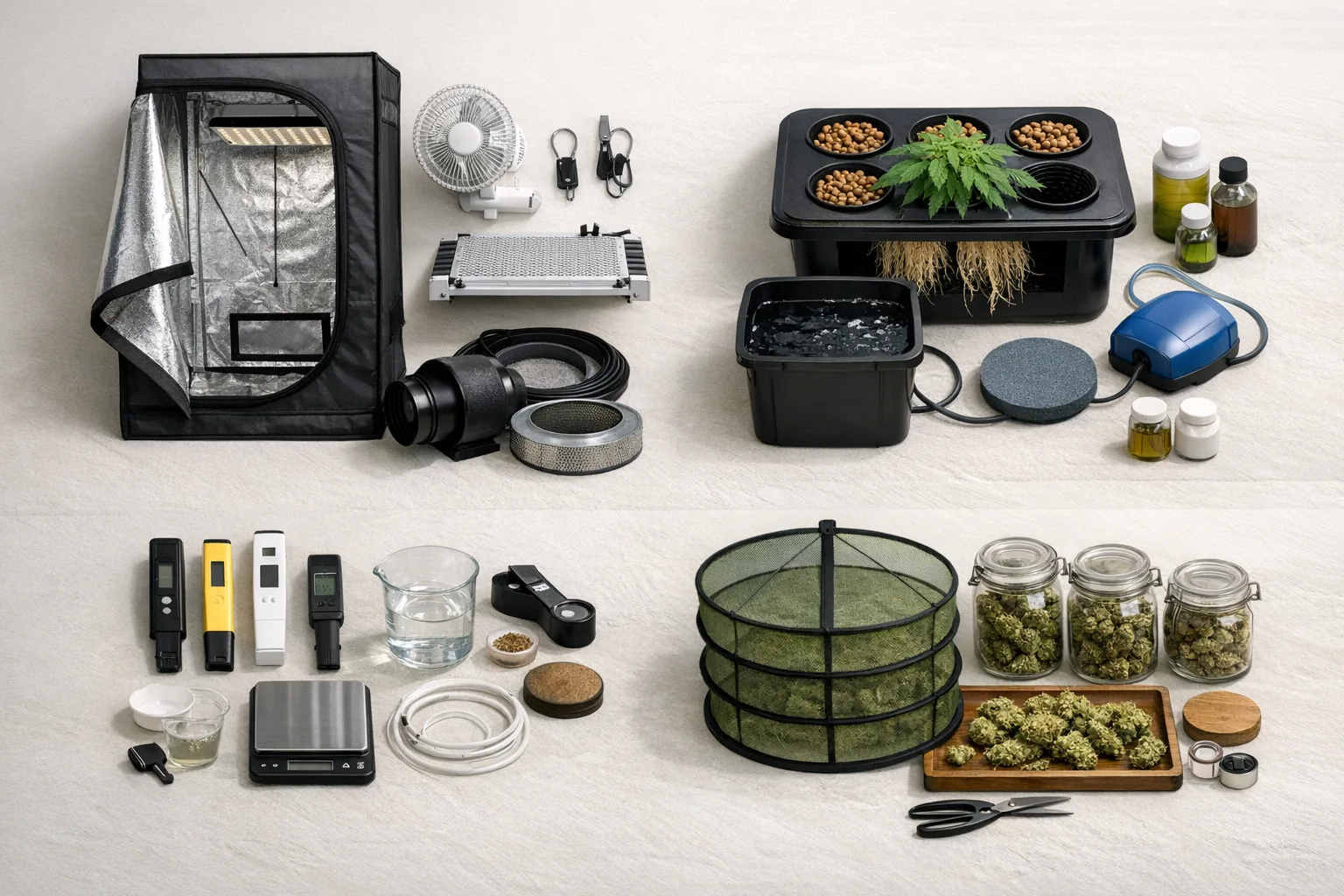
Compact grow system map comparing cabinet containment and grow tent flexibility inside a small cannabis workflow.
The enclosure choice changes how the rest of the compact workflow behaves, not just how the room looks.
Why it matters in a compact grow

Small spaces reward containment and punish contradiction.

In a large room, weak habits can hide behind spare volume. In a compact grow, the enclosure has nowhere to send your contradictions. If the canopy gets too wide, the room feels tight immediately. If humidity rises, the air feels heavy faster. If the odor path is sloppy, the shared space notices sooner. That is why enclosure choice matters more in small-space cultivation than many beginners expect.

A cabinet usually keeps those boundaries more explicit. It encourages a contained footprint, a more deliberate service pattern, and a cleaner sense of what belongs inside the workflow and what does not. That is especially helpful for growers who want the system to push back when the plan becomes unrealistic. Pages like compact cannabis grow setup for apartments and low odor cannabis grow setup make more sense once you see the cabinet as a containment choice, not just a furniture choice.

A tent matters because flexibility is not automatically a weakness. If you still need to learn how much room you really use, what access pattern feels sustainable, or how different gear placements change the air path, a tent gives more freedom to adjust. But that same freedom can keep the room ambiguous. A tent is easier to outgrow mentally before you outgrow it physically. Growers who choose tents well usually pair that freedom with stronger daily discipline, which is why the tent path often benefits from a clear routine like daily grow checks, a firm troubleshooting layer such as why growth is slow in a compact setup, and the quality-first framing in craft cannabis cultivation.

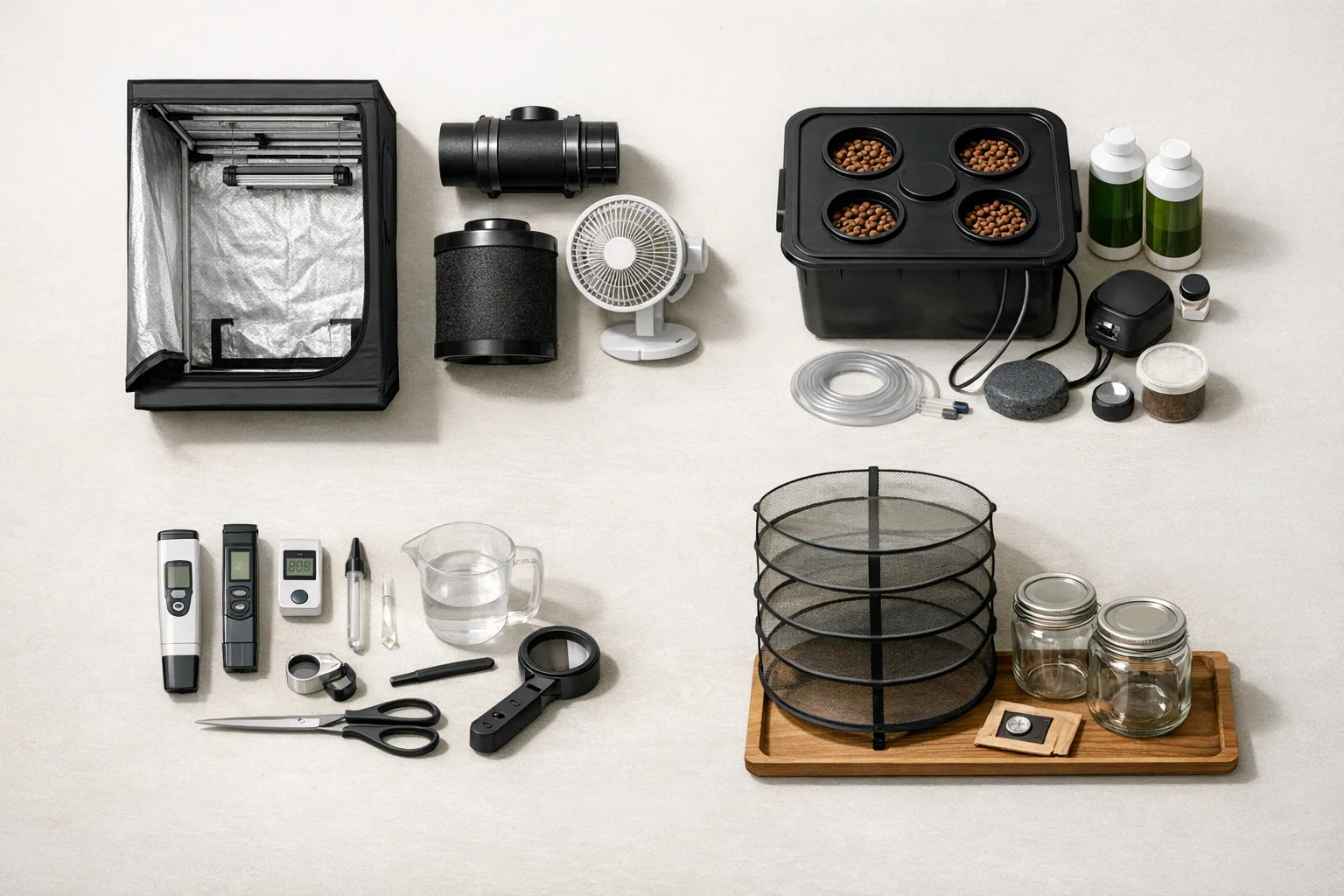
Airflow and access comparison between a compact grow cabinet and a small grow tent, showing filtered exhaust, service lane, and enclosure footprint.
The better enclosure is the one that keeps airflow, access, and plant size believable inside the real footprint.
Decision layer

Use the room, not mood, to decide.

Decision point Cabinet usually fits better Tent usually fits better
Room identity You want the grow to feel contained and integrated. You are fine with a softer room boundary and more visible infrastructure.
Future changes You expect the workflow to stay fairly fixed. You want freedom to move parts, resize, or reconfigure.
Plant scale pressure You want the enclosure to force scale discipline early. You want more forgiveness while learning structure control.
Odor and shared space You want the room to begin from stronger containment. You can still manage shared-space pressure, but only with a cleaner air path and more vigilance.
Method style You prefer a contained compact workflow with a fixed finish path. You prefer modularity and do not mind more manual room interpretation.

This is where comparison pages go wrong when they chase a winner. There is no universal winner. The cabinet is usually better when the grower wants the enclosure to enforce cleaner behavior. The tent is usually better when the grower needs the setup to stay more open-ended. The mistake is choosing the cabinet while secretly wanting tent flexibility, or choosing the tent while secretly hoping it will behave like a tight compact system without the same discipline.

Where DWC or VGrow fits

DWC and VGrow usually make more sense when the enclosure is already acting like one system.

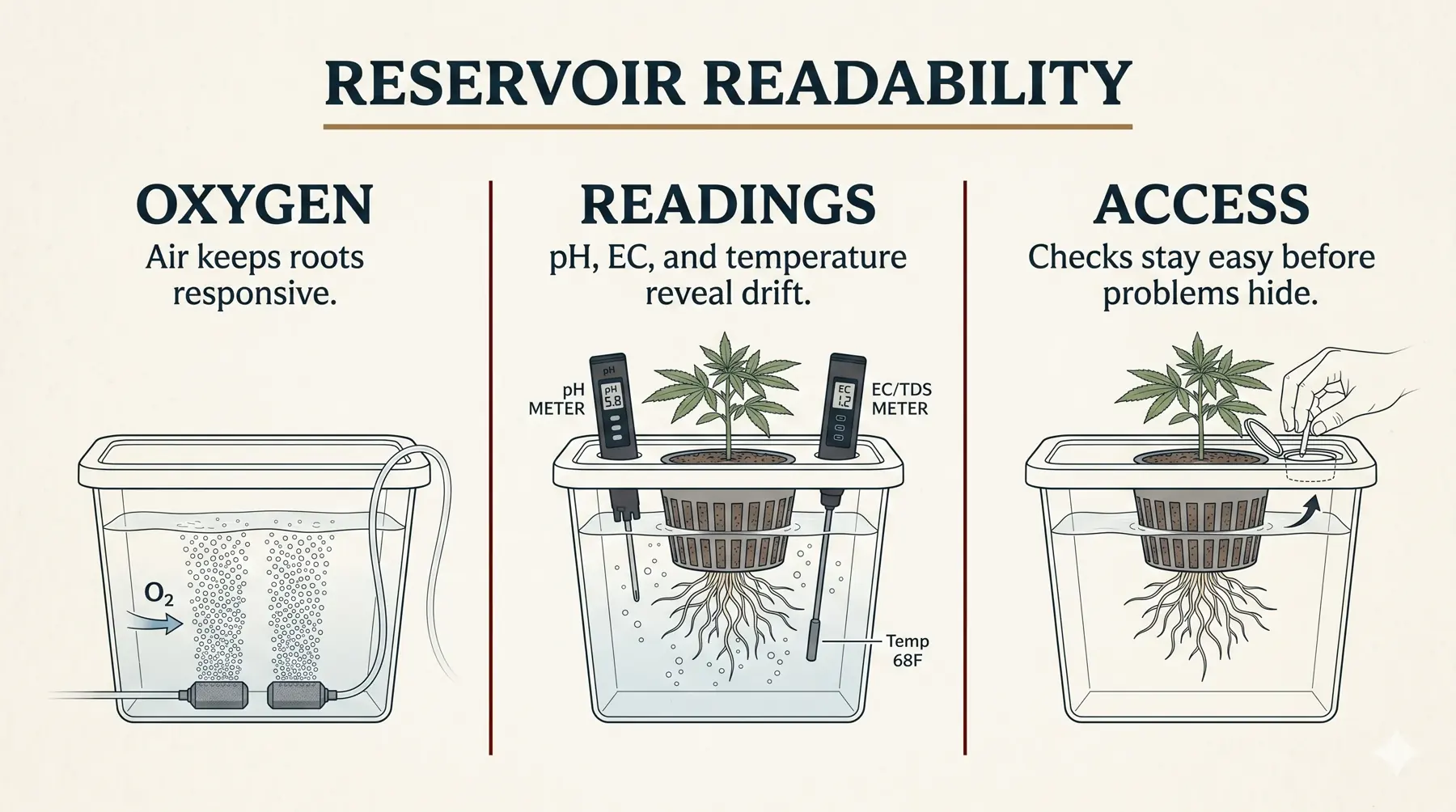
Deep water culture sharpens the feedback loop. Roots respond quickly, reservoir changes show up quickly, and the room becomes easier to read when the enclosure is not fighting that clarity. That is one reason the flagship VGrow DWC guide aligns more naturally with cabinet logic. The cabinet contains the environment. The DWC reservoir makes the root zone more direct. Together they create a workflow where mistakes are easier to notice and harder to rationalize away.

A tent can absolutely hold DWC. The issue is not compatibility. The issue is whether the broader room behavior stays coherent enough for hydro to feel clean rather than noisy. If the tent is crowded, the service access awkward, or the surrounding space unstable, DWC can feel more complicated than it really is because the enclosure is adding confusion around it. That is why readers who are still deciding on method should compare DWC vs soil for small cannabis grows after this page, not before it.

The same logic applies to growers asking whether a smart box path is worth it. The value is not gadgetry. The value is that a contained cabinet plus a readable hydro workflow can make a compact grow feel more unified. If your instinct is already moving toward a fixed routine, clean access, and a smaller plant supported all the way through finish, the cabinet path will usually feel more natural. If you are still experimenting with footprint, training style, and room layout, the tent path may still be the more honest first step.

Compact DWC cabinet panel showing reservoir readability, service access, and why a contained enclosure suits a fixed hydro workflow.
DWC usually feels clearer when the enclosure already behaves like one contained workflow.
Common mistake

People often choose the enclosure they admire instead of the one their routine can actually support.

The most common error is aesthetic projection. A cabinet can look cleaner, more premium, and more final, so some growers choose it before they know whether they can support a compact, fixed workflow. A tent can look cheaper or more temporary, so some growers dismiss it even when they are still in a learning phase where flexibility would actually protect them.

The second error is scale denial. A cabinet fails when the grower keeps asking it to host a plant, a maintenance pattern, or a finish plan that belongs in a larger room. A tent fails when the extra volume becomes an excuse to let airflow, humidity, and structure drift until the room stops telling a clean story. If the enclosure and the routine disagree long enough, the plant becomes the messenger for a room-level mismatch.

That is why it helps to keep this page connected to humidity problems in a grow cabinet, how to lower humidity in a small grow tent, and root problems in DWC. Many so-called plant problems are really enclosure and workflow problems wearing plant symptoms.

Quick read

Do not ask a cabinet to act like a tent, and do not ask a tent to create cabinet discipline by magic.

  • Choose the enclosure that matches your maintenance style
  • Keep the plant in scale with the footprint
  • Make the finish plan part of the decision, not an afterthought
  • Let access and cleanup matter as much as canopy ambition
Practical takeaway

Pick the enclosure that makes the next six decisions easier, not the one that wins the first impression.

If you already know you want a compact, contained, finish-first workflow, the cabinet path usually serves you better. If you still need room to learn, move parts around, and discover what the system really asks of you, a tent may be the more honest starting point.

Run the decision in sequence. Start with the room. Ask how much space you truly have, how the air path will behave, and whether shared-space pressure matters. Then ask what method you actually want to run. If the answer points toward contained hydro and a fixed routine, move closer to cabinet logic and keep reading through cannabis growing equipment and the grow FAQ. If the answer points toward flexibility first, a tent may protect you from overcommitting before the rest of the workflow is settled.

01 Read the room

Decide whether containment or reconfiguration is the real pressure point.

02 Read the method

Choose whether the root zone and training style want a tighter or looser enclosure.

03 Read the finish

Make sure the enclosure still supports the path into harvest, drying, and cure.

04 Keep it in scale

The best enclosure is the one that still feels believable in late flower, not only on setup day.

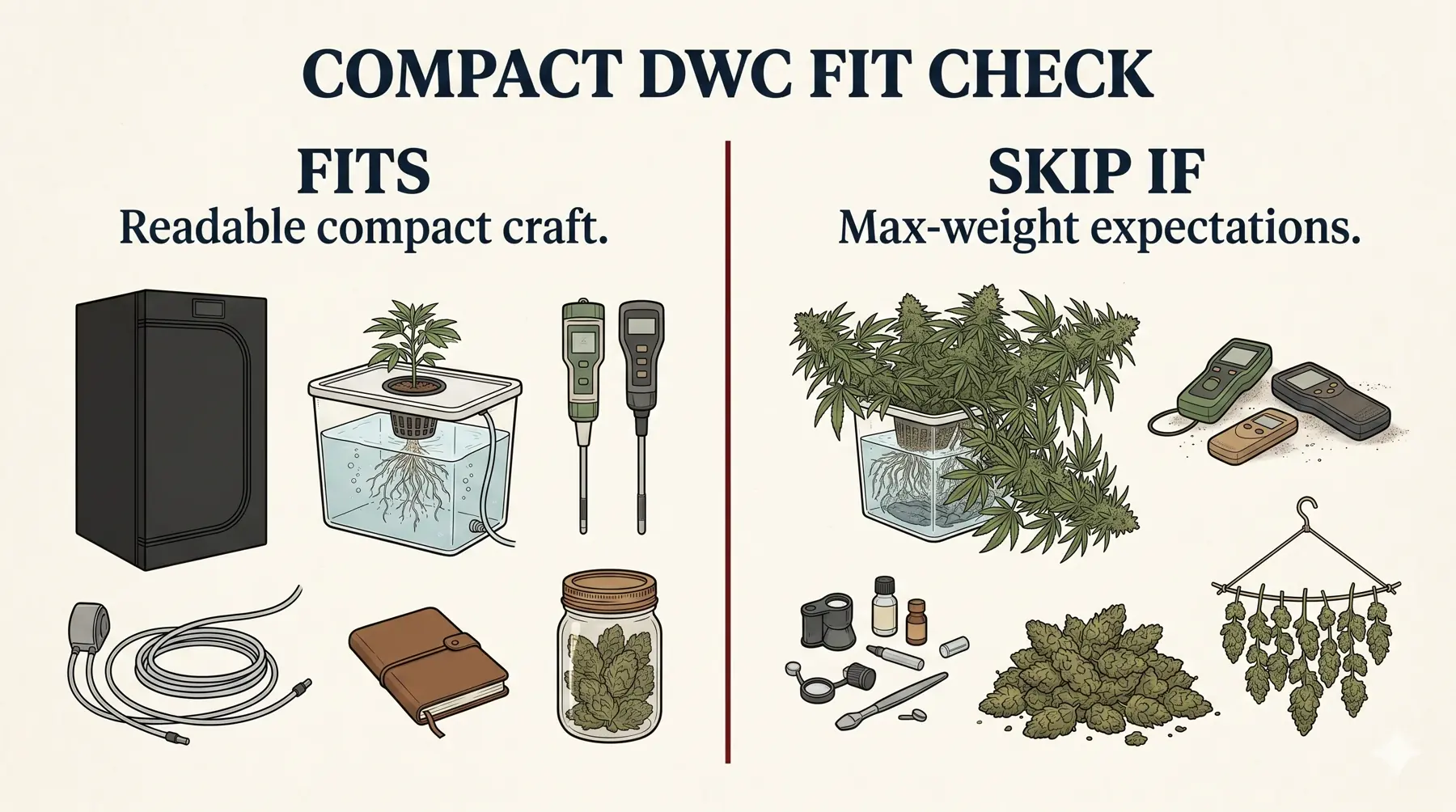
Apartment fit-check board comparing cabinet and tent footprint, access lane, plant spread, and maintenance path in a compact home grow.
The enclosure decision is strongest when footprint, access, and plant scale are checked together.
FAQ

Questions people usually mean when they search this phrase.

Is a cabinet better than a grow tent for beginners?

Not automatically. A cabinet is better for beginners who want a contained, fixed workflow and are willing to respect the footprint. A tent is better for beginners who still need room to experiment with layout and access. The cleaner beginner choice is the one that matches the way you actually maintain the room.

Does a grow tent produce more than a cabinet?

Not by magic. A tent may allow more room, but more room only helps if the method, the air path, and the plant structure still stay controlled. In compact growing, quality usually falls faster from mismatch than it rises from extra volume.

Is DWC easier in a cabinet or a tent?

DWC usually feels cleaner in a cabinet when the whole setup is already designed as one contained workflow. It can still work in a tent, but the tent needs to stay readable enough that reservoir maintenance and room behavior do not become separate arguments.

Which is better for a small apartment grow?

A cabinet often fits apartment constraints more naturally because containment, access, and visual integration are clearer from the start. But the better answer still depends on whether your actual routine can support that tighter enclosure honestly.