VGrow DWC guide

Smart grow boxes work best when the cabinet, reservoir, and finish plan stay connected.

Among smart grow boxes, the Vivosun VGrow DWC setup stands out when the VGrow Smart Grow Box, matching DWC Hydroponics Growing System Kit, and finish plan are treated as one workflow. In practical terms, that means a contained cabinet, a hydro root zone with direct oxygen and nutrient access, and a workflow that can be run through local stage controls or the app instead of being improvised from scattered parts.

The real appeal is not that the bundle looks modern. It is that the whole stack can become unusually readable for a compact grow. That makes it a strong Craft fit and a weak max-weight fit, which is exactly why ColaXpress keeps using it as the reference path. A cabinet can organize hardware. It cannot organize a grower's appetite for noise.

What it is A contained grow cabinet paired with a 4-gallon DWC reservoir kit and stage-based control logic.
Who it fits Beginners, compact-space growers, and anyone who wants readable signals more than giant-room ambition.
What makes it work Contained environment, direct root-zone feedback, and a finish plan that is treated as part of the build.
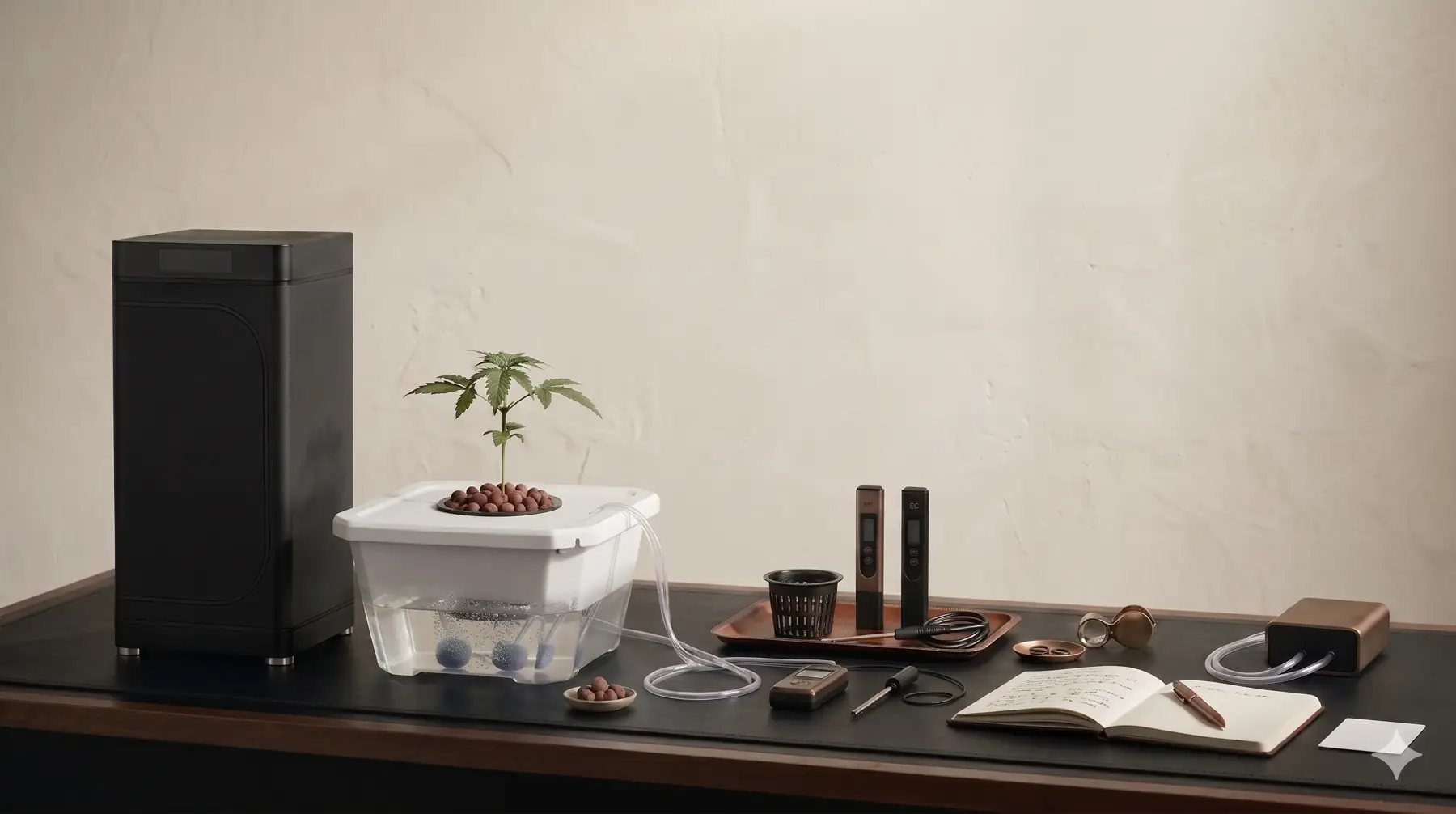
Compact VGrow-style grow cabinet and DWC reservoir setup arranged with pH, EC, aeration, and finish tools for a craft-first workflow.
A compact DWC setup only helps when the cabinet, reservoir, readings, and finish plan stay connected.
Smart grow boxes

Smart grow boxes should make the grow easier to read, not easier to ignore.

Smart grow boxes usually combine the enclosure, lighting, airflow, controls, sensors, and sometimes hydroponic hardware into one compact system. The useful question is not how many features the box has. The useful question is whether those features make the plant, root zone, environment, and finish plan easier to understand.
Why VGrow is the example

The VGrow path is a specific smart grow box example, not a claim that every box works the same way.

ColaXpress uses the VGrow DWC setup because it gives the smart grow box topic a concrete reference: contained room, hydro reservoir, stage logic, and drying workflow. That keeps the page broad enough for smart grow boxes while still honest about the exact system being explained.

What it actually is

The VGrow DWC path is easier to trust when the hardware is understood as workflow, not just equipment.

According to Vivosun's official product and support pages, the VGrow Smart Grow Box can be run through local stage selection for seedling, vegetative, flowering, and drying, or through the app for expanded control and alerts. The matching DWC kit adds a 4-gallon reservoir, dual air stones, a maintenance window, and active water monitoring through a meter and temperature sensor. Those are not just specs. They are the parts of the system that make compact hydro easier to read.

That is why this guide is not trying to out-manual the manual. The real question is not what each button does in isolation. The real question is whether the stack makes the room, the roots, and the finish easier to manage honestly. For the right grower, it does, and it does so by reducing the number of places vague process can hide.

Why ColaXpress uses it

The bundle matters less as a product than as a cleaner answer to the compact-grow problem.

  • Contained room
  • Direct reservoir feedback
  • Stage-based workflow from seedling to drying
Workflow spine

The system only feels simple after the cabinet, reservoir, method, and finish all stop competing for attention.

Step 1 Build the room

Start with the VGrow cabinet as the contained environment so light, airflow, odor, and stage control belong to one enclosure.

Step 2 Read the reservoir

Add the DWC kit, then treat pH, EC, water level, and oxygenation as the truth-telling layer of the whole run.

Step 3 Keep the method compact

Pair the system with a clean flowering rhythm like 12/12 from seed so the plant respects the room instead of fighting it.

Step 4 Protect the finish

Harvest, drying, and cure still decide whether the run lands well, so the workflow is incomplete without a real finish plan.

Official Vivosun docs emphasize automation and a streamlined beginner experience. That is useful, but the actual value is more grounded: the stack reduces scattered variables. It makes the grow feel less like a room full of separate promises and more like one readable system.

What official pages do well

The product pages can explain features, included parts, and stage controls clearly enough.

The official Vivosun guides are useful for understanding what is in the bundle, how stage selection works, what the app can monitor, and what the DWC kit actually includes. That is exactly what a manufacturer page should do. It should tell you what the cabinet, reservoir, air stones, and sensors are supposed to be doing.

What it cannot do as well is translate those features into grower fit. Hardware pages describe capability. They do not tell you whether your habits will let that capability stay honest.

What the product page cannot decide

The real questions are about fit, discipline, and whether the finish already has a place in the plan.

  • Will you actually read pH, EC, and water behavior, or will you expect presets to replace judgment?
  • Do you want a compact Craft workflow, or are you trying to force a max-weight agenda into a contained cabinet?
  • Are you buying a cleaner system, or just a better-looking excuse to improvise later?
  • Do harvest, drying, and cure already belong to the build, or are they still being treated like tomorrow's problem?

That is the difference between a feature page and a field guide. One tells you what the hardware can do. The other tells you what the hardware still expects from you.

Official setup video

Watch Vivosun's official DWC setup walkthrough before you judge the workflow.

The manufacturer video is useful for seeing how the VGrow Hydroponics System Kit physically comes together. ColaXpress still treats the setup as only one part of the workflow: the reservoir has to stay readable, the cabinet has to stay in scale, and the finish plan still has to exist before harvest arrives.

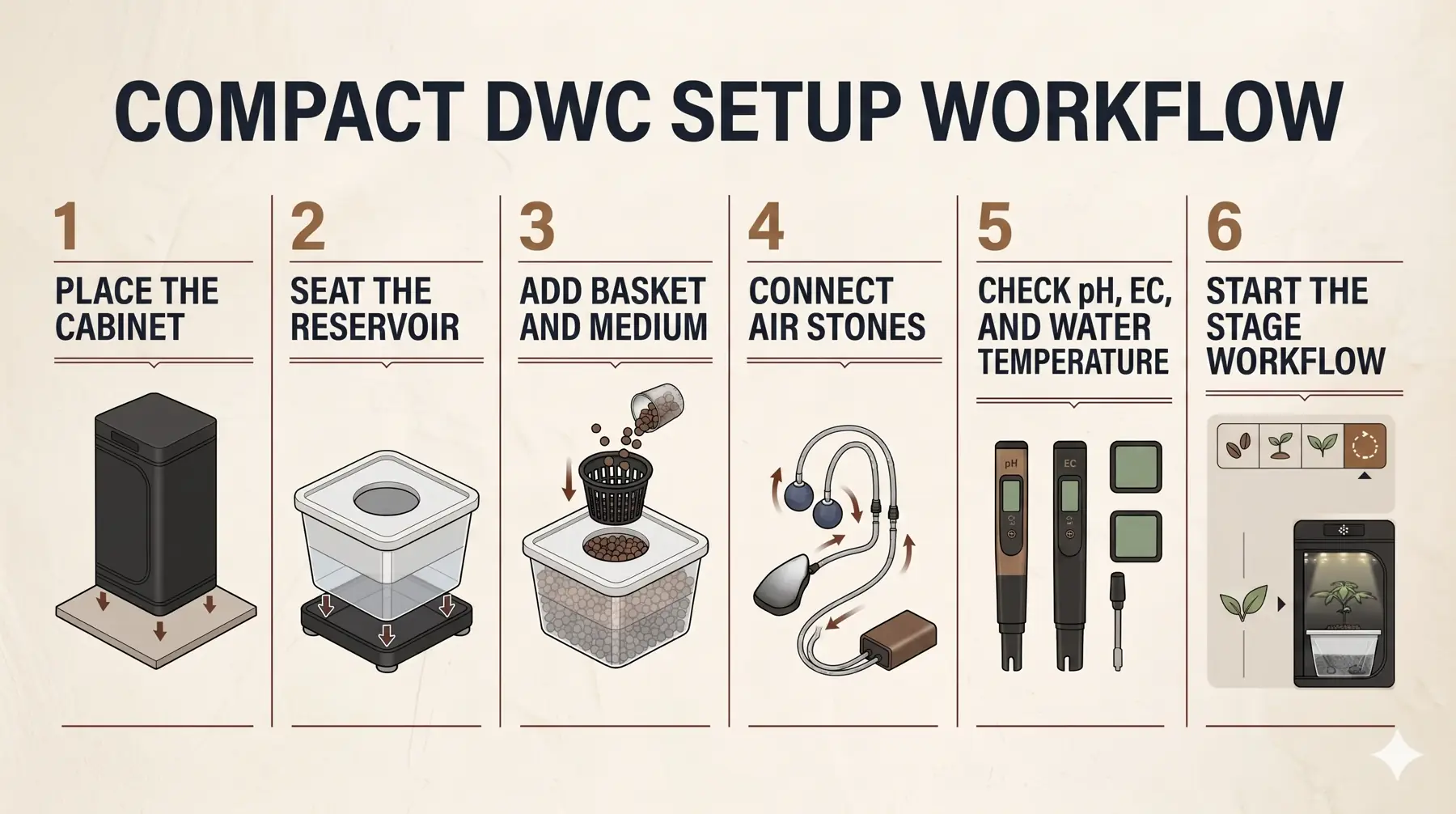
Field guide setup board showing six compact DWC workflow steps from placing the cabinet to starting the stage workflow.
The video shows the hardware coming together; the board keeps the setup order tied to readings, aeration, and stage discipline.
What each part contributes

Each piece matters because it solves a different part of the compact-growing problem.

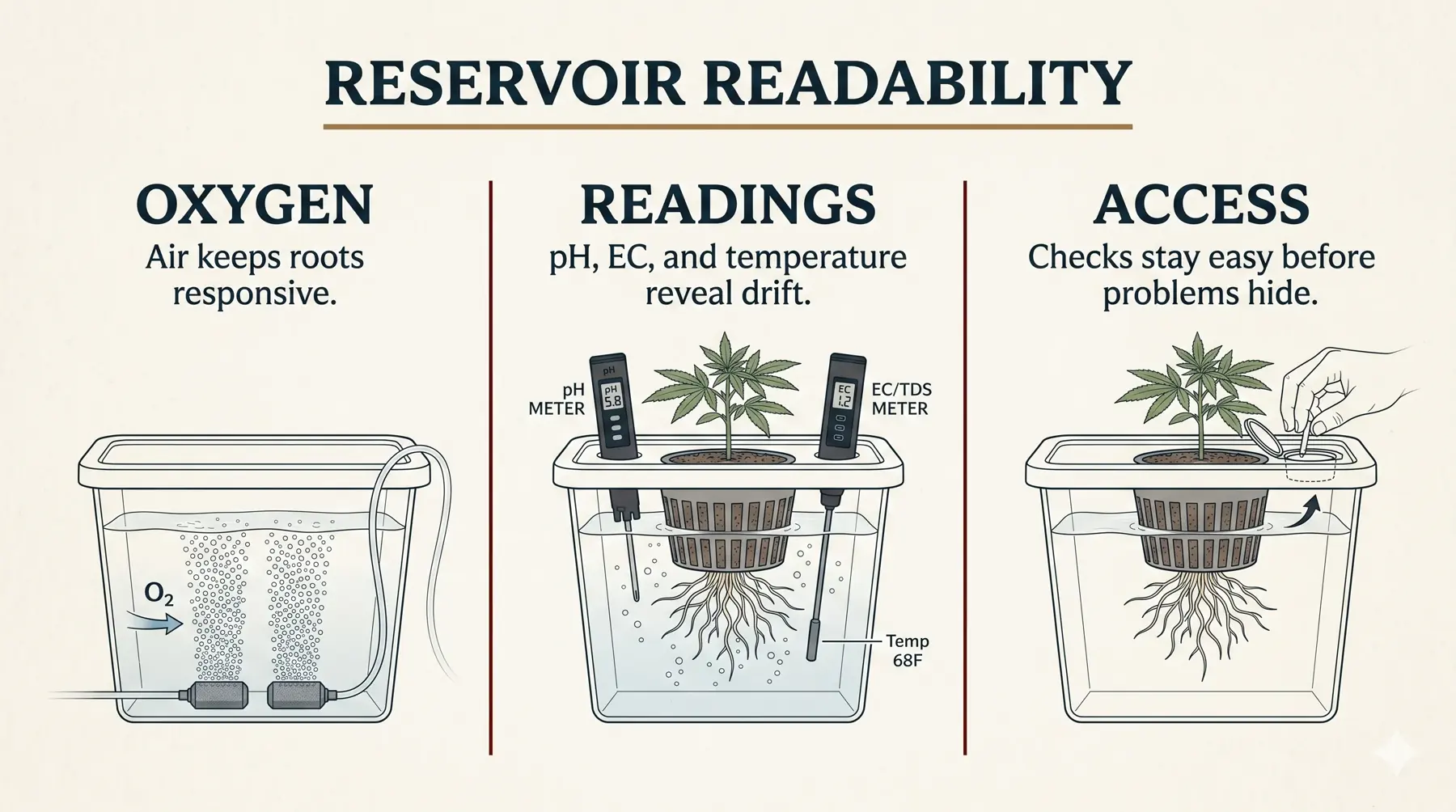
Technical reservoir readability panel showing oxygen, pH and EC readings, water temperature, and access cues for a compact DWC setup.
The reservoir earns its place by making oxygen, readings, and access visible before problems can hide.
VGrow

The cabinet contains the argument

The box keeps light schedules, airflow behavior, and odor control tied to one space instead of leaking into a looser room that gets harder to interpret.

DWC

The root zone tells the truth fast

The 4-gallon reservoir, dual air stones, and maintenance-friendly access matter because hydro answers quickly when something drifts, and that honesty is useful in a compact run. If the reservoir stops feeling trustworthy, use root problems in DWC before turning a readable warning into a whole-system panic.

Stages

The workflow stays sequenced

Seedling, vegetative, flowering, and drying modes keep the run staged from the start, which makes it easier for a beginner to move forward without inventing the whole rhythm from scratch.

Who it fits

This path fits growers who want clearer signals and fewer places for process to hide.

  • Beginners who want a real cabinet-and-hydro workflow instead of assembling one from scattered parts.
  • Compact-space growers who want the environment and root zone tied together more tightly.
  • Readers willing to monitor pH, EC, and finish quality instead of expecting the app to replace judgment.
  • Growers who care more about repeatability, readable Craft, and final flower quality than about max-weight bragging rights.
Who should skip it

This path is weaker for growers who want either full simplicity or full chaos.

  • Anyone unwilling to learn basic hydro readings like pH and EC.
  • Growers chasing the largest possible plant in a footprint that was built for restraint.
  • People who treat drying and curing like something to figure out after harvest.
  • Readers who want the idea of automation without accepting the discipline of reading the room and reservoir.
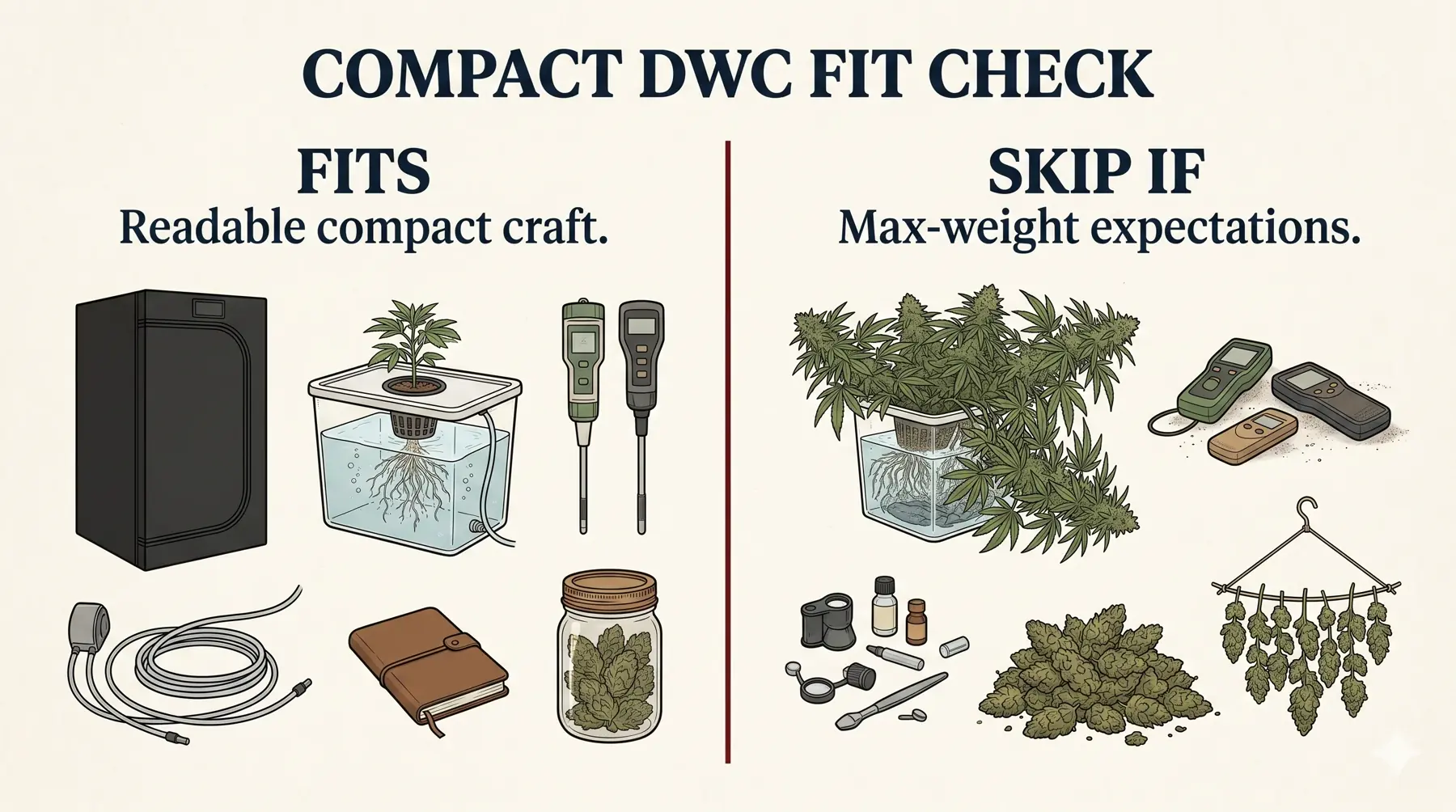
Comparison board showing compact DWC growers who fit readable craft workflows versus growers chasing max-weight expectations.
The better fit is not the grower who wants the most hardware; it is the grower who will keep the system readable.
Fit table

The system becomes easier to judge when the questions are asked plainly.

Question If yes If no
Do you want a contained room? The cabinet becomes a real advantage instead of just a premium-looking box. You may not need the full integrated enclosure logic this path is built around.
Are you willing to monitor pH and EC? The DWC kit becomes a strong beginner system because its feedback stays useful. The root zone will feel more stressful than simplified.
Are you okay trading size for clarity? This path aligns naturally with compact Craft growing. You may end up fighting the cabinet with a max-weight mindset.
Will you plan drying and cure early? The whole workflow can land cleanly instead of ending in panic. The system will still grow flower, but the finish can easily become the weak link.
What to buy first

The bundle is not the whole answer, but it should still be built in the right order.

Start with the cabinet and DWC kit, then make sure the reading tools already exist: pH meter, EC meter, hygrometer, and a loupe or macro tool before harvest arrives. After that, make sure the finish tools are already waiting. The best explanation of the purchase order is still in what to buy first and the broader stack logic on the equipment page.

This is usually the point where product pages start sounding louder than the grow itself. The calmer rule is better: buy what makes the room readable, the reservoir measurable, and the finish possible. The rest should wait until the grow asks for it honestly.

What people misunderstand

The app, the presets, and the kit do not eliminate the need for judgment.

  • Automation does not mean the room no longer needs to be observed.
  • Hydro speed does not mean more nutrients always equals a better run.
  • A drying stage in the cabinet is not the same thing as a whole finish strategy.
  • Marketing claims about speed or ease do not replace cultivar behavior, environment, or finish discipline.
Why this works as Craft

The VGrow DWC path makes sense when the goal is finished flower with composure, not just a room full of managed hardware.

Craft cultivation favors readable systems, smaller corrections, and a finish that is protected from the first day of the build. That is why this path works so naturally inside ColaXpress. The room is contained. The roots answer quickly. The method can stay compact. The finish can be planned early. The whole run becomes easier to keep honest.

The philosophy behind that lives more fully on craft cannabis cultivation, and the room-specific version lives on compact craft cannabis grow. If the room fit is clear but the root-zone method is still under debate, compare DWC vs soil for small cannabis grows before treating the hardware choice like a personality test. The short version is simple: this stack supports quality because it reduces places for denial to accumulate.

Why this is not max weight

The path gets weaker the moment the grower asks it to impersonate a much larger system.

The VGrow DWC setup is not designed to be a brute-force answer to plant size. It is strongest when paired with a compact, disciplined rhythm that respects the cabinet and the finish chain. The farther the grow drifts into giant-plant expectations, the more the system starts feeling crowded, noisy, and misread.

That is why the clean pairing is still the same: 12/12 from seed, daily checks, honest harvest timing, and a real cure plan. The cabinet is not the point. The composure it allows is the point.

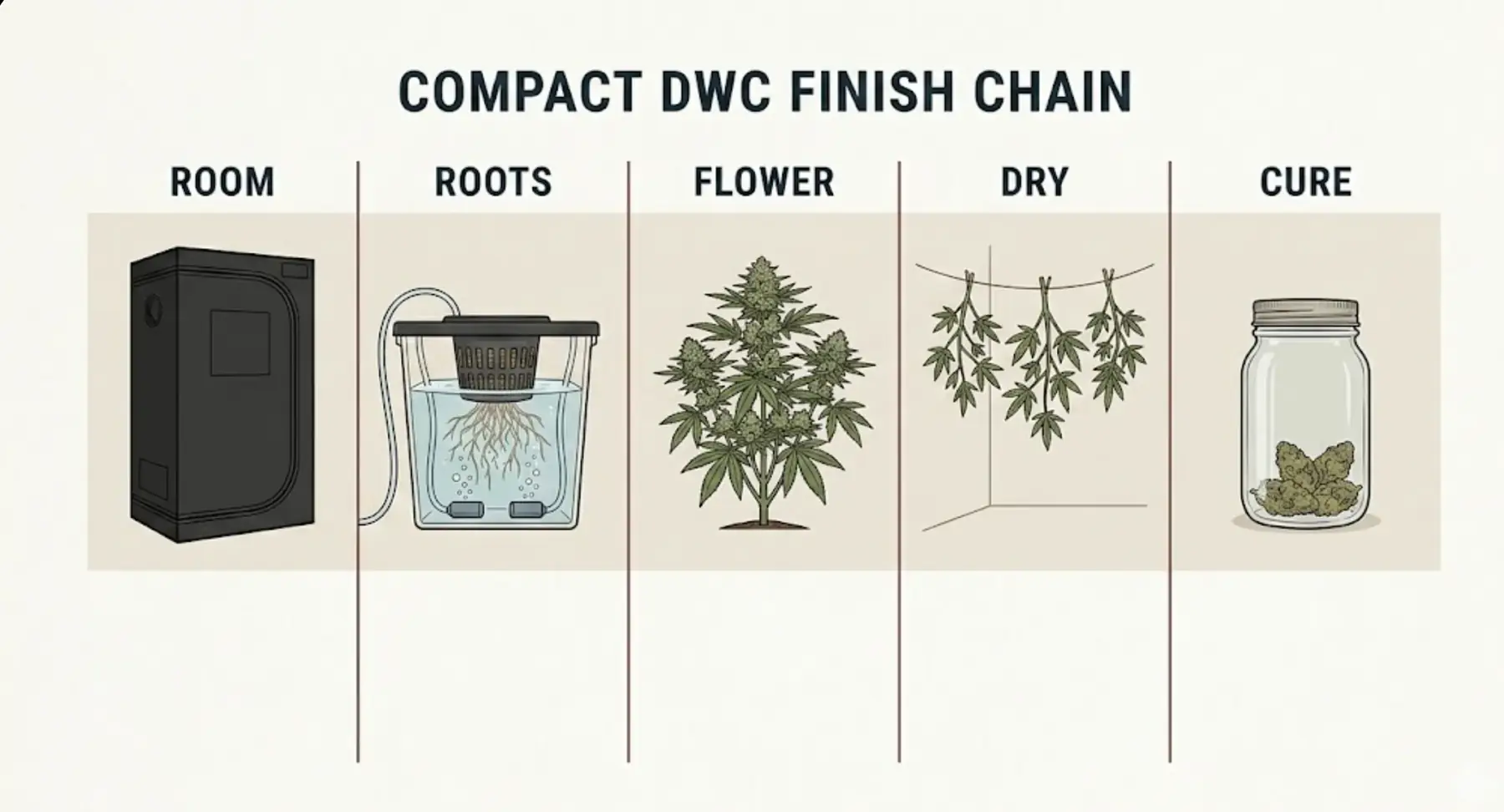
Process panel showing a compact DWC finish chain from room to roots, flower, drying, and cure.
The cabinet is only the start; the craft case is made when roots, flower, drying, and cure stay connected through the finish.