Apartment setup guide

Compact Cannabis Grow Setup for Apartments

A compact cannabis grow setup for apartments is a small, secured, personal-use-sized indoor grow that respects housing rules, shared-air reality, plant limits, and the finish work waiting at the end. If apartment growing is lawful where you live and your lease or building rules do not forbid it, the best setup is usually an enclosed system with realistic odor control, readable airflow, sane electrical use, and a plant plan that still fits the room once flowering starts.

That answer matters because apartments punish denial faster than bigger homes do. Shared walls, tighter storage, smaller dry space, and more obvious odor drift mean the setup has to be honest from day one. A compact grow that fits the apartment can feel calm. A larger, showier plan usually becomes a maintenance problem with neighbors attached.

First filter Check current local law, lease terms, and building rules before setup.
Best room logic Enclosed, secured, low-variance, and scaled to the finish path.
Main failure Trying to run a large-room grow inside a small shared building.
What it means

Apartment growing is not just smaller growing. It is shared-space growing.

Searchers using this phrase usually want a setup that can live in a tighter home without turning the apartment into a permanent negotiation. That changes the answer immediately. The goal is not simply to shrink a tent. The goal is to build a room-within-a-room that stays believable around smell, noise, access, watering, drying, and the basic question of whether the building even allows the activity.

In practice, a compact apartment setup usually means an enclosed cabinet or small tent, a plant count that stays comfortably inside the legal and practical limit, and a workflow that does not assume extra closets, a detached garage, or a spare drying room. That is why the setup needs to be treated as one system instead of a string of gear decisions. The enclosure, odor control, watering logic, electrical load, and finish plan all need to cooperate.

Apartment readers also need a different first question than people with a whole house. The first question is not "How much can I fit?" It is "What can this home actually carry without turning into a constant correction?" That is the same question behind small space cannabis grow, but apartments make the answer stricter because the consequences of drift are more obvious.
Short version

An apartment grow should feel contained, readable, and boring in the best possible way.

  • Check law and housing first
  • Use an enclosure you can actually secure
  • Keep plant structure believable
  • Plan odor, airflow, and finish before the first sprout
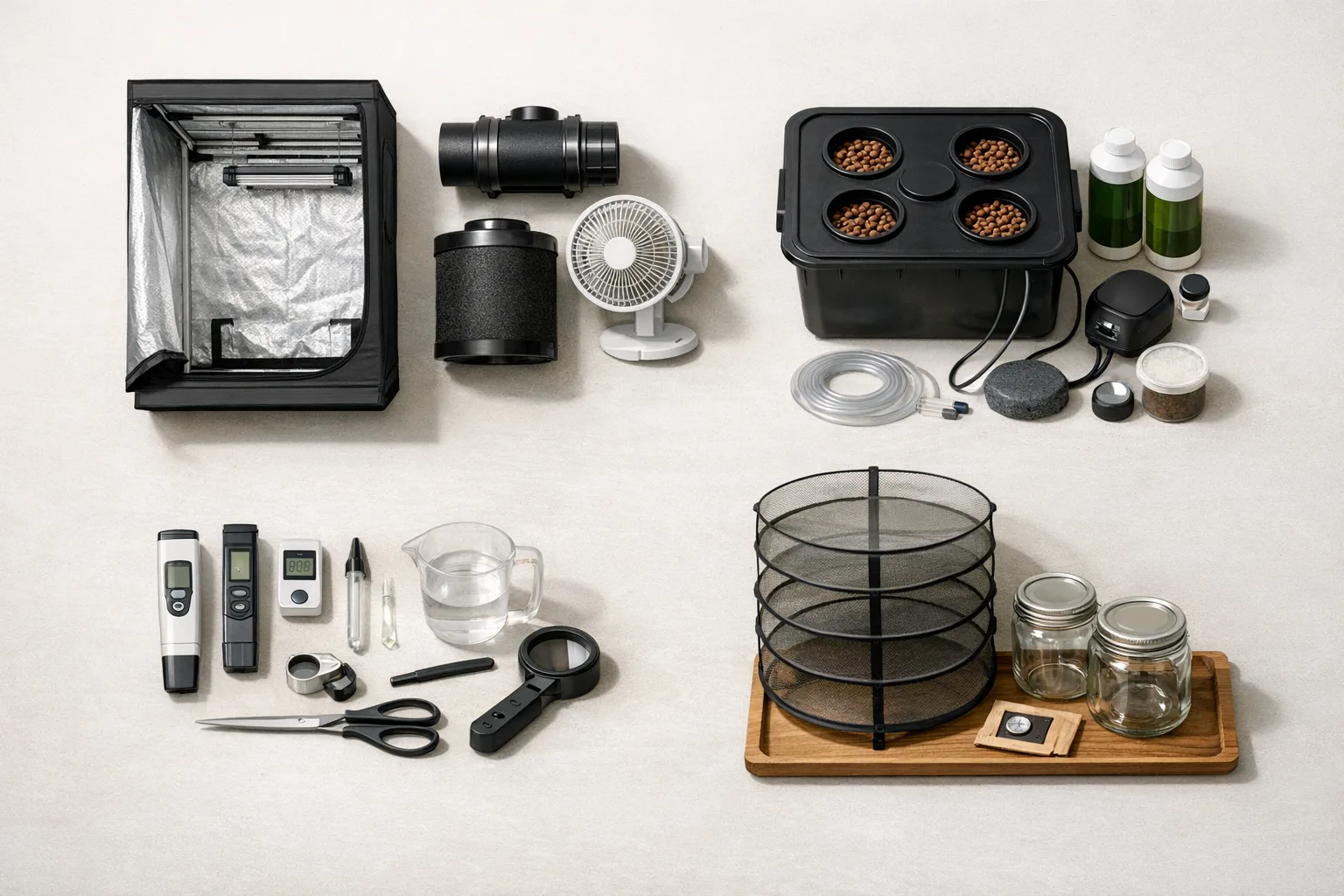
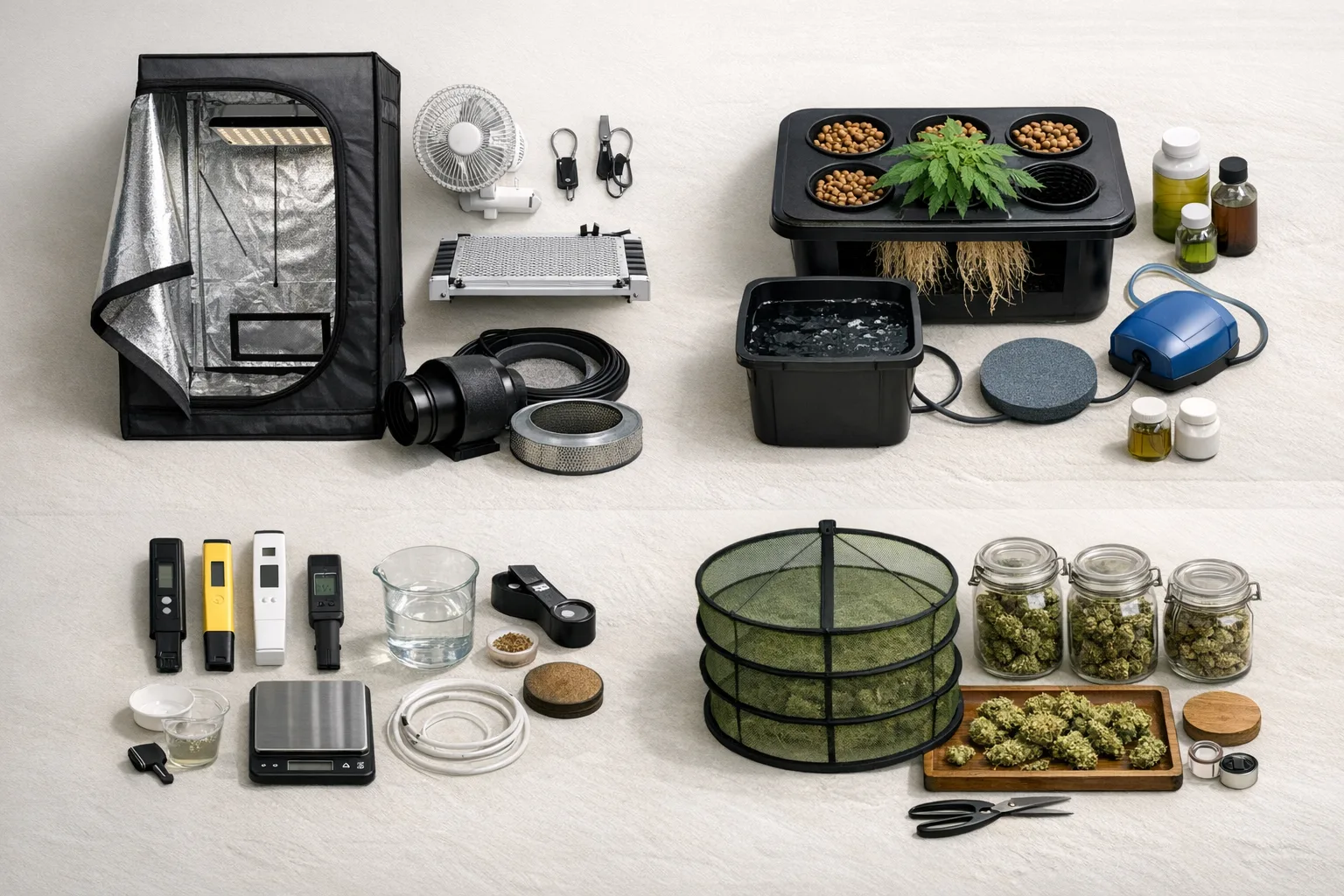
Compact apartment grow system map showing enclosure, room air, odor control, and drying workflow inside a small residential footprint.
The room has to work as a whole: enclosure, air path, odor control, access, and finish all need to fit the apartment at the same time.
Why it matters in a compact grow

Apartment constraints make every sloppy assumption louder.

Apartments are where compact-growing logic either becomes useful or becomes fantasy. The same issues that already matter in a small room become more serious when the room shares walls, vents, hallways, and daily living space with everything else in your home. Heat piles up faster. Humidity drifts into the rest of the apartment more easily. Odor becomes a relationship problem instead of a private inconvenience. Drying space gets harder to improvise. Even carrying water in and out becomes part of the design.

That is why a real apartment setup should be smaller than what the grower is emotionally tempted to run. The setup gets better when it stays easy to secure, easy to ventilate, and easy to inspect. This is also why the first pages that matter are usually cannabis grow room setup checklist, cabinet grow vs grow tent, and the broader indoor cannabis grow system hub before the gear stack gets specific.

The other hidden reason this matters is the finish. Apartment growers often focus hard on vegetative and flowering space, then realize too late that the dry and cure still need a calm place to happen. If the room can grow the plant but cannot dry it without odor spikes, humidity drift, or rushed improvisation, the setup was never actually finished. If the apartment lane is already clear and the main problem is room-level odor discipline, use low odor cannabis grow setup as the direct companion page.

Apartment fit-check board showing enclosure footprint, access lane, odor path, and height clearance for a compact indoor cannabis grow.
Apartment fit is not just floor space. It is access, height, air path, and whether the setup still behaves well once the plant fills out.
Decision layer

The strongest apartment setups are chosen by pressure points, not by hype.

Pressure point What a strong setup does What weak setups usually do
Housing rules Starts with lease, building, and local-law checks. Assumes state legality settles everything.
Odor and air Keeps the smell path, exhaust path, and room air readable. Lets odor become an afterthought once flowering starts.
Plant size Uses a canopy the enclosure can still support in flower and dry-down. Pushes a larger plant until the room starts lying.
Daily access Leaves room to inspect, water, trim, and clean without acrobatics. Fills the footprint so tightly that every check becomes disruptive.
Finish plan Knows where the dry and cure will happen before harvest. Treats drying and jars like somebody else's problem.

This table is why apartment guidance should not drift into generic lifestyle filler. The setup question is specific: what enclosure can you secure, what plant can the room carry, what odor path can the apartment tolerate, and what finish path can you support without panic? If the answer to any one of those stays fuzzy, the room is not ready yet.

For New York readers, the clean legal starting point is is home grow legal in New York. That page now uses an OCM-only source posture and is the correct first stop when the apartment question is partly legal, not just technical.

Where DWC or VGrow fits

Contained systems can fit apartments well, but only when containment stays real.

DWC and cabinet-style systems can make sense in apartments because they compress the workflow into a smaller, more readable footprint. A contained enclosure, a controlled reservoir, and a clear air path can be easier to manage than a looser room build. That is the strongest case for the flagship Vivosun VGrow DWC guide: not that every apartment needs that exact stack, but that apartments reward contained systems that reduce guesswork.

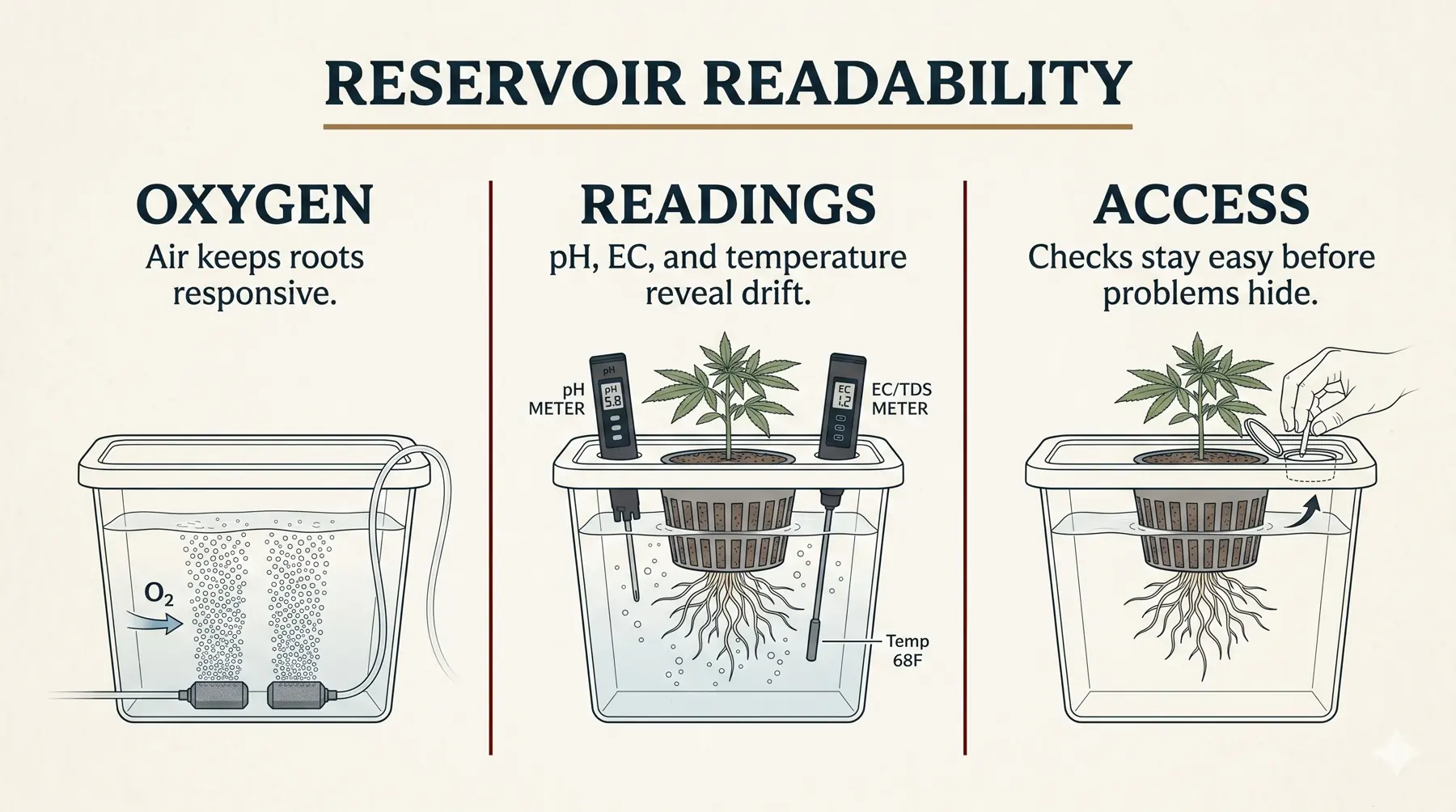
DWC is not automatically the safest apartment method, though. It is a better fit only when the reservoir stays readable, spill risk is taken seriously, and the grower is willing to check pH, EC, temperature, and water behavior instead of hoping the root zone behaves on its own. A small apartment does not forgive water drift any more than it forgives odor drift. That is why the method has to match the person as much as the space. If hydro still feels foggy, start with DWC for beginners before assuming the cabinet form factor alone solves the problem.

The same rule applies to cultivar choice. An apartment cabinet works best when the plant still fits the enclosure honestly, which is why best cannabis strains for small spaces belongs in the same decision cluster as this page.

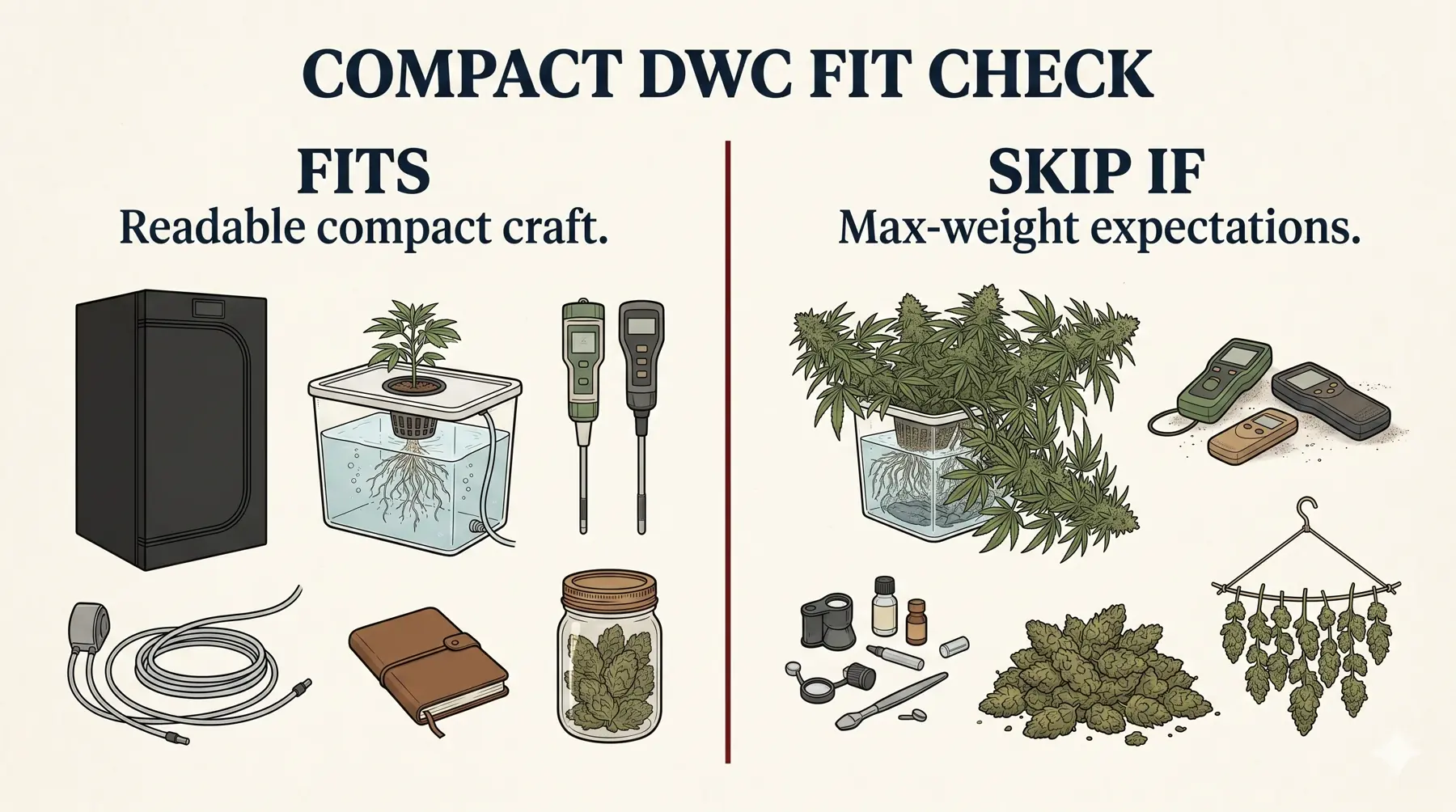
Compact DWC cabinet with reservoir-readability notes and apartment-safe workflow checkpoints for access, spill control, and maintenance.
A cabinet only helps an apartment if the contained workflow is still easy to inspect, clean, and correct without turning into a spill or odor problem.
Common mistake

The classic apartment mistake is treating the setup like stealth theater instead of room design.

Readers get into trouble when the plan revolves around hiding the grow instead of stabilizing it. That mindset usually creates the exact problems apartments punish most: overcrowded enclosures, bad air movement, ignored lease rules, unrealistic odor assumptions, and a finish plan that appears only after the harvest is already demanding space. The result is a room that feels tense even when the plant looks healthy.

Another common mistake is maxing out plant count just because the law allows a higher number in some places. Apartments rarely benefit from running the legal ceiling if the room, the dry space, or the grower's routine cannot support it cleanly. In compact homes, believable scale is often the difference between a system and a problem.

What to avoid
  • Skipping lease and building checks because state law sounded broad.
  • Choosing an enclosure that technically fits the corner but leaves no real access lane.
  • Assuming carbon filtration excuses every other odor or airflow mistake.
  • Running a plant that outgrows the cabinet, then trying to train away the mismatch.
  • Forgetting that dry-down, jars, and storage still need space inside the same home.
Source posture

What this page is based on

This page stays educational and compact-grow focused. It is not legal advice. Where legal or housing-adjacent boundaries appear, ColaXpress uses the New York legal trust lane as the reference model and keeps the language narrow instead of pretending every apartment has the same rules. If the apartment question turns into a renter or building-permission question, move from the state baseline into can landlords ban home grow in new york before you widen the room plan.

Reviewed May 6, 2026 against current New York OCM adult-use, landlord, and home-cultivation materials. Educational content only. If your housing or local-law situation is unclear, verify it before setup.

Apartment grow setup order board showing legal check, enclosure choice, air path, method fit, and finish planning in sequence.
The order matters more in an apartment: clear the housing lane, choose the enclosure, map the air path, then build the method and finish around that reality.
Practical takeaway

The best apartment setup is the one your home can actually carry all the way through cure.

Apartment success usually comes from restraint, not cleverness. Clear the legal and housing lane first. Use an enclosure that stays readable. Keep the plant and method in scale with the room. Then plan the finish before the flowers start forcing the issue.

01 Clear the rules

Check current local law, lease terms, building policy, and any housing-specific restrictions before you set the room.

02 Choose the enclosure

Pick a cabinet or tent that still leaves room for access, odor control, and cleaning instead of filling the corner just because it can.

03 Match the method

Use a root-zone method and plant plan you can monitor calmly in a shared home. If hydro fits, keep it readable. If not, do not force it.

04 Plan the finish

Make sure the apartment can handle the dry, jar, and storage phase before the grow starts pretending the hard part is only flowering.

If you want the shortest version, start with the setup checklist, then read cabinet grow vs grow tent, then use equipment to keep the hardware honest. If the apartment question is really a housing question in disguise, move through About, FAQ, and the New York law page before you widen the setup.

FAQ

Questions people usually mean when they search this phrase.

Can you grow cannabis in an apartment?

Sometimes, but only where current law allows adult home cultivation and your housing rules do not forbid it. Apartment growing always needs a lease and building check before the enclosure decision means anything.

Is a cabinet or a tent better for an apartment grow?

The better choice is the one that stays easier to secure, ventilate, and inspect in your actual room. Use cabinet grow vs grow tent for the fuller tradeoff.

Is DWC too risky for an apartment?

Not automatically, but it is only a fit if the reservoir stays readable and spill risk is taken seriously. A contained hydro setup helps only when the root zone is still easy to monitor and correct.

Do landlords and building rules still matter if state law allows home grow?

Yes. State legality does not erase lease terms, building rules, or housing-specific restrictions. That is the first apartment filter, not a footnote. If you need the renter-specific New York answer, read can landlords ban home grow in New York before you treat the room as cleared.

What usually causes apartment grows to fail first?

Oversizing the plant or enclosure, underestimating odor and humidity drift, and treating the finish path like something that can be improvised later. Apartments punish those three mistakes quickly.