Cure guide

Curing cannabis protects the final flower after drying.

Curing cannabis happens after drying, once the flower is ready for jars. The goal is to let remaining moisture redistribute slowly so aroma, texture, and smoke quality settle into something cleaner, smoother, and more stable over time.

The harvest gets the drama. The cure gets the consequences. This is the stage where patience starts looking a lot like skill.

Handoff Drying matters because cure only works when the flower enters the jar in a sane range.
Cure Let the flower even out, calm down, and improve without forcing the jar into constant rescue mode.
Main risk Jarring too early and trapping more moisture than the flower can handle.
Visual reference

The best cure feels calmer each week because the jar is getting easier to read, not more dramatic to manage.

Curing works when the flower enters the jar within a workable moisture range, then stays steady enough for smell, feel, and jar behavior to settle together. The visual system on this page is meant to help you read that progression quickly, not replace judgment.

  • Read the cure through smell, texture, and moisture behavior together.
  • Let the jar tell you whether the flower is too wet, on track, or drifting too dry.
  • Expect less drama over time if the handoff from drying was clean.
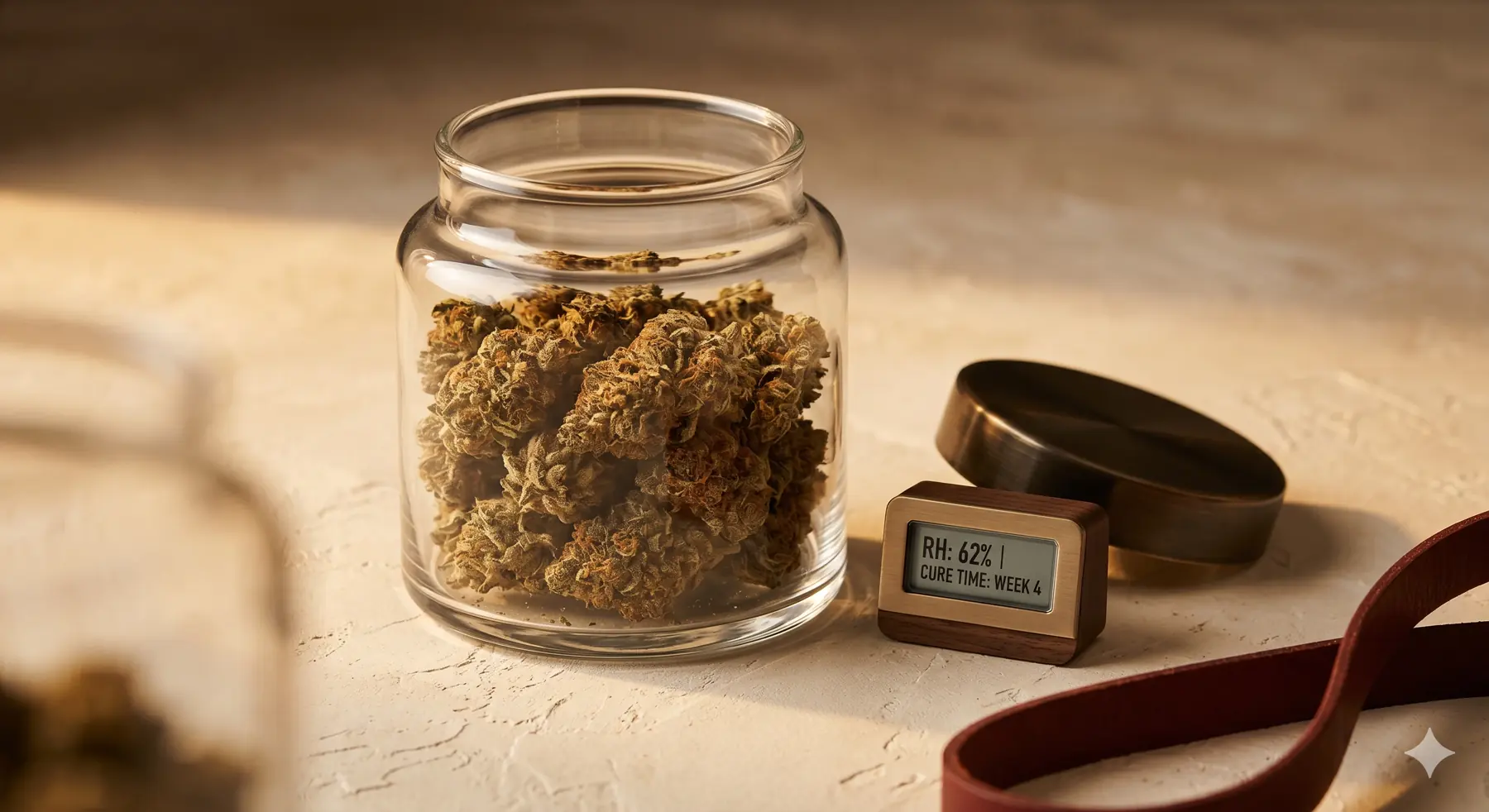
Cannabis flower curing in a glass jar beside a hygrometer and lid on a warm ivory surface.
The cure works best when the jar stays readable: steady moisture, cleaner aroma, and less need for constant intervention.
What cure is doing

Curing is moisture management plus slow refinement.

Once flower is jar-ready, curing helps the remaining moisture even out more gently while aroma and smoke quality continue to improve. If you want the shortest definition before the full workflow, start with what is curing and then come back here for the complete process. A good cure does not feel flashy. It feels like the jar keeps getting calmer and the flower keeps getting cleaner.

What drying still controls

The cure can refine the finish, but it cannot forgive a bad handoff forever.

Drying still sets the terms. If the outside dries too quickly while the inside stays wet, the flower can feel deceptively ready right up until the jar starts telling a much less flattering story.

Timeline

Post-harvest quality control works best as a clean sequence.

Step 1 Hang and dry

Keep light low, airflow gentle, and the environment steady while the flower sheds surface moisture.

Step 2 Check stems and feel

Look for the point where smaller stems start to snap and the flower feels dry outside without turning brittle.

Step 3 Jar carefully

Once the flower is dry enough, move it into jars without pretending the moisture question is settled forever.

Step 4 Cure with attention

Watch humidity, vent when needed, and give the flower enough time to smooth out instead of rushing it to the finish line.

The awkward part sits between Step 2 and Step 3. That is the moment where the sequence stops being obvious and starts demanding judgment. If the handoff feels fuzzy, use the checks in how to tell buds are ready for jars before asking a cure to rescue a drying call it never agreed to carry.

Handoff test

Use the jar handoff to confirm readiness, not to gamble on it.

Drying is done when the flower feels settled, smaller stems snap with some confidence, and the buds stop rebounding into a damp, spongey mood after a short sealed rest. That is the handoff point a cure can actually work with.

False finish

The classic fake-out is still a crisp shell hiding a wetter core.

That is why jars sometimes turn dramatic a few hours after they were filled. The outside looked composed, the inside was still busy, and now the whole container is being asked to keep a secret it clearly cannot keep. This part is about spotting the lie before the cure absorbs the consequences.

Early warning

How to tell if the flower hit the jar too wet.

  • The buds feel damp again after sitting in the jar.
  • The humidity spikes and refuses to settle down.
  • The smell starts leaning musty, stale, or grassy instead of cleaner.
  • The flower feels spongey when it should feel settled.

If that happens, take the buds back out, let them dry further, and reset the handoff. It is annoying, but a lot less annoying than pretending the jar is fine when it clearly is not.

Cure rhythm

A good cure gets quieter as the weeks go on.

Week 1

Read the jar closely

The first stretch is about watching for moisture rebound, checking aroma, and making sure the handoff from drying was actually real.

Weeks 2-3

Let balance take over

If things are going well, the buds feel more even, the smell cleans up, and the jar stops acting like it needs a crisis manager.

Week 4+

Refinement, not rescue

By this point the cure should feel deliberate. If the jar is still swinging wildly, the problem is usually earlier than the lid.

This is why overhandling backfires. If the jar is stabilizing, touch it less. A cure that is improving should feel more predictable each week, not more theatrical because the lid keeps getting involved.

What good looks like

A healthy cure changes smell, feel, and jar behavior at the same time.

Smell

The aroma gets cleaner

A good cure should move away from wet-grass harshness and toward a clearer, more defined smell that feels less raw every week.

Feel

The flower feels balanced

The buds should not feel swampy, then brittle, then swampy again. They should start feeling settled, springy, and more consistent from one jar check to the next.

Jar

The jar stops surprising you

Good cure behavior is boring in the best possible way. Humidity settles, the flower stops rebounding dramatically, and the jar no longer feels like a mood swing in glass form.

State board

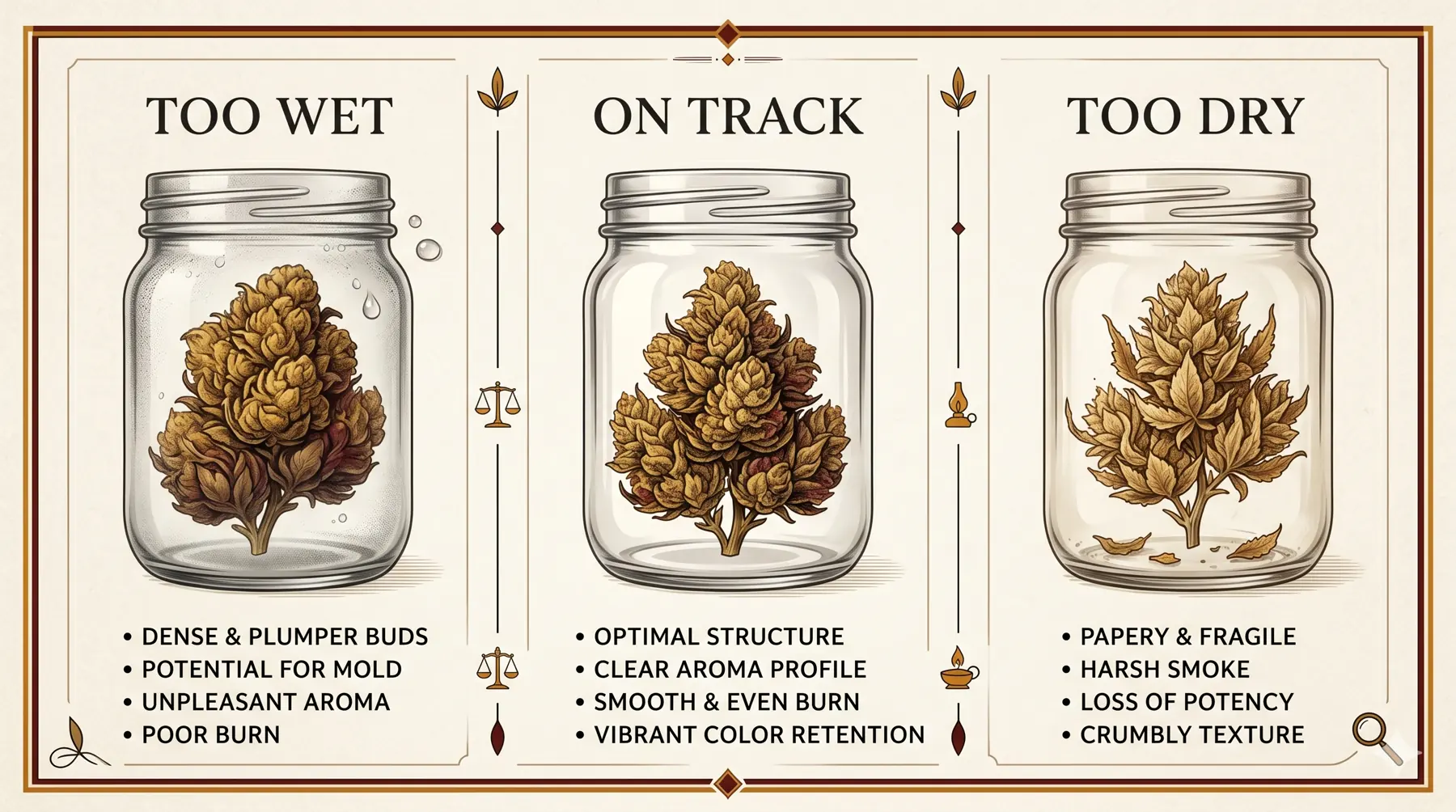
The jar usually lives in one of three states: too wet, on track, or too dry.

Curing state board comparing too wet, on track, and too dry cannabis in jars.
Use the board to keep the read simple: too wet jars stay active, on-track jars get calmer, and too-dry jars start losing the softness the cure needs.
Decision points

When the jar does something strange, respond to the signal instead of following ritual.

If the jar does this It usually means Best next move
Humidity jumps hard after sealing The flower likely entered cure too wet. Take the buds back out, dry a bit longer, and restart the handoff.
The smell stays grassy or dull The cure is still young, or the dry/cure balance was rough. Reassess moisture, keep conditions steady, and avoid overhandling while the jar settles.
The buds feel brittle fast Too much moisture has already been lost after the jar. Stop treating every reading like an emergency and reduce unnecessary lid time.
Jar state guide

Most cure questions boil down to three jar states: too wet, on track, or too dry.

Too wet

The jar feels active in a bad way

Humidity spikes, buds feel damp again, the smell stays swampy or flat, and the cure starts acting like an emergency-management project.

On track

The jar feels quieter each week

The aroma gets cleaner, the flower feels more even, and the container stops surprising you every time you open it.

Too dry

The flower starts feeling papery and overhandled

The buds lose softness, the jar looks stable but lifeless, and the whole cure starts feeling flatter than it should for this stage.

That framework keeps the response simple. If the jar is too wet, step back and dry more. If it is on track, stop interfering. If it is drifting too dry, quit treating every reading like a crisis and let the cure keep its remaining balance.

If it smells grassy

Grassy does not always mean ruined, but it does mean pay attention.

Early in cure, some grassy character can simply mean the process is still young. The real warning sign is when that smell stays flat, damp, or stale while the jar also feels too wet or strangely active. That is usually not a "just wait it out" situation.

If it feels too dry

A cure can also be overmanaged into something brittle and forgettable.

Not every problem comes from excess moisture. Some jars get fussed with so much that the flower loses the softness it needed to keep refining well. If the buds are already stable, constant lid time is not discipline. It is interference.

Read the jar

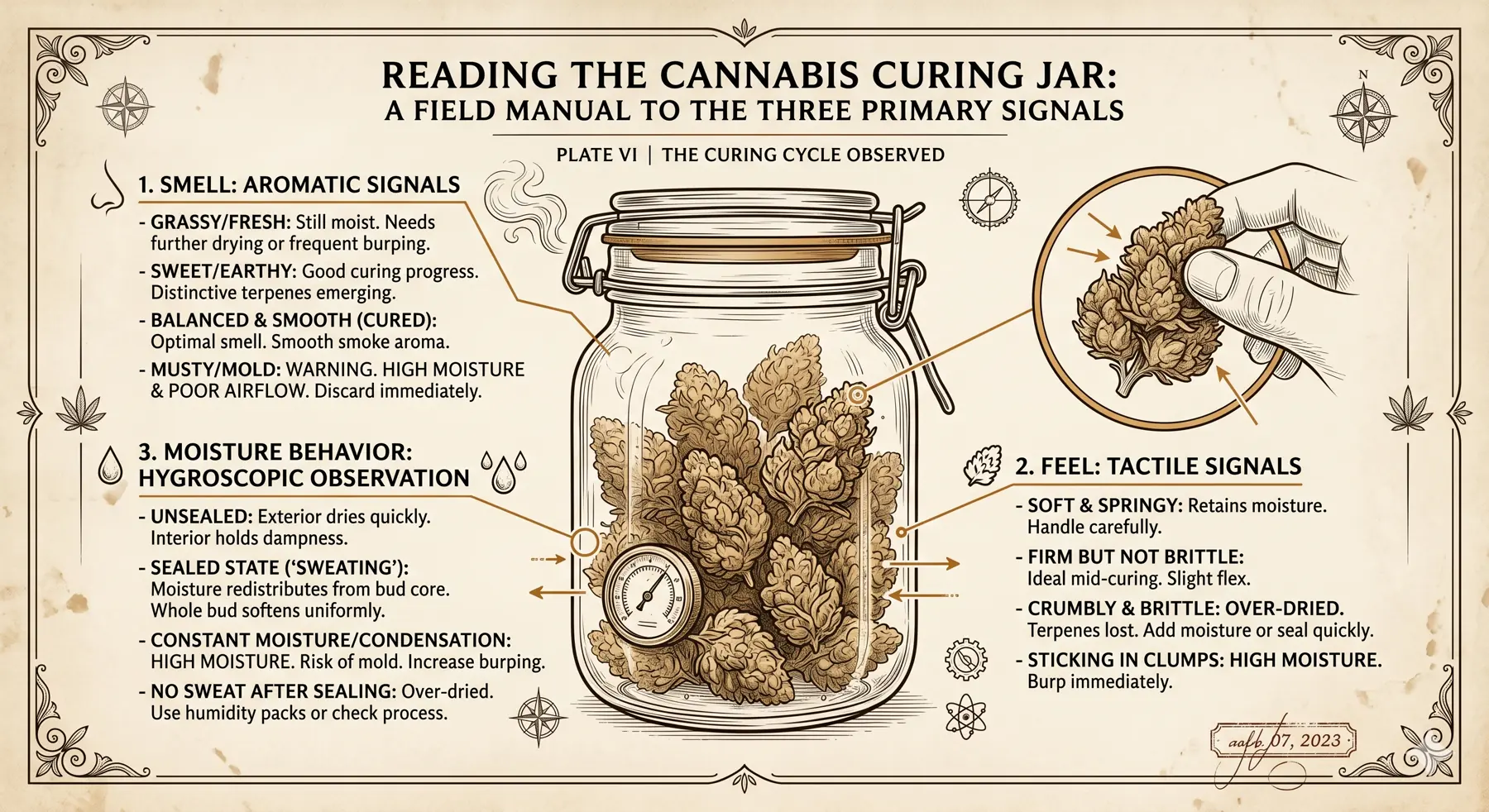
Smell, feel, and moisture behavior usually tell the story faster when you read them together.

Diagram explaining how to read a curing jar through aroma, tactile feel, and moisture behavior.
Reading the cure gets easier when smell, texture, and moisture behavior are treated as one system instead of three separate mysteries.
Lid choices

Self-burping lids can help, but they do not replace judgment.

These lids reduce some manual venting, which is useful. What they do not do is rescue flower that was jarred too early. Moisture still wins that argument every time.

The best way to think about them is as convenience hardware, not as character witnesses. A good lid can make a stable cure easier to manage. It does not turn an unstable cure into a good one through optimism.

If a tool is worth using, it should make the cure easier to read, easier to keep clean, and easier to manage consistently. It should not encourage the grower to check out mentally just because the hardware looks clever on the counter.

Lid Why people like it What to watch
Pickle Pipe Simple, low-profile, easy to clean. Still requires honest jar checks.
Stainless valve lid Durable, tidy, and a little more premium. Costs more and still does not override moisture reality.
All-in-one fermenter style Convenient for people who want less repetitive venting. Easy to overtrust if the flower was never ready for the jar.
Where people stumble

The usual post-harvest mistakes are almost always impatience wearing a lab coat.

People rarely ruin cure because they do not care. They usually ruin it because the flower looks almost done, the jar is sitting right there, and the brain starts campaigning for closure. That is how small compromises become a full-time jar management hobby.

  • Drying too fast with too much heat or aggressive airflow.
  • Jarring flower before the inside and outside moisture have actually settled.
  • Trusting one humidity reading as if the whole cure is now guaranteed.
  • Rushing because the flower already looks done and the grower wants closure.
  • Believing a premium lid or gadget will solve a moisture problem that started earlier.

The cleaner move is usually less dramatic: read the jar honestly, make one correction at a time, and let the flower show whether it is stabilizing. A cure is supposed to mature. It is not supposed to feel like customer support.