The routine should be quick enough to keep, but sharp enough to matter.
A useful daily check does not require a clipboard fantasy. It needs a consistent look at the room, the root zone, and the plant so small problems stay small.
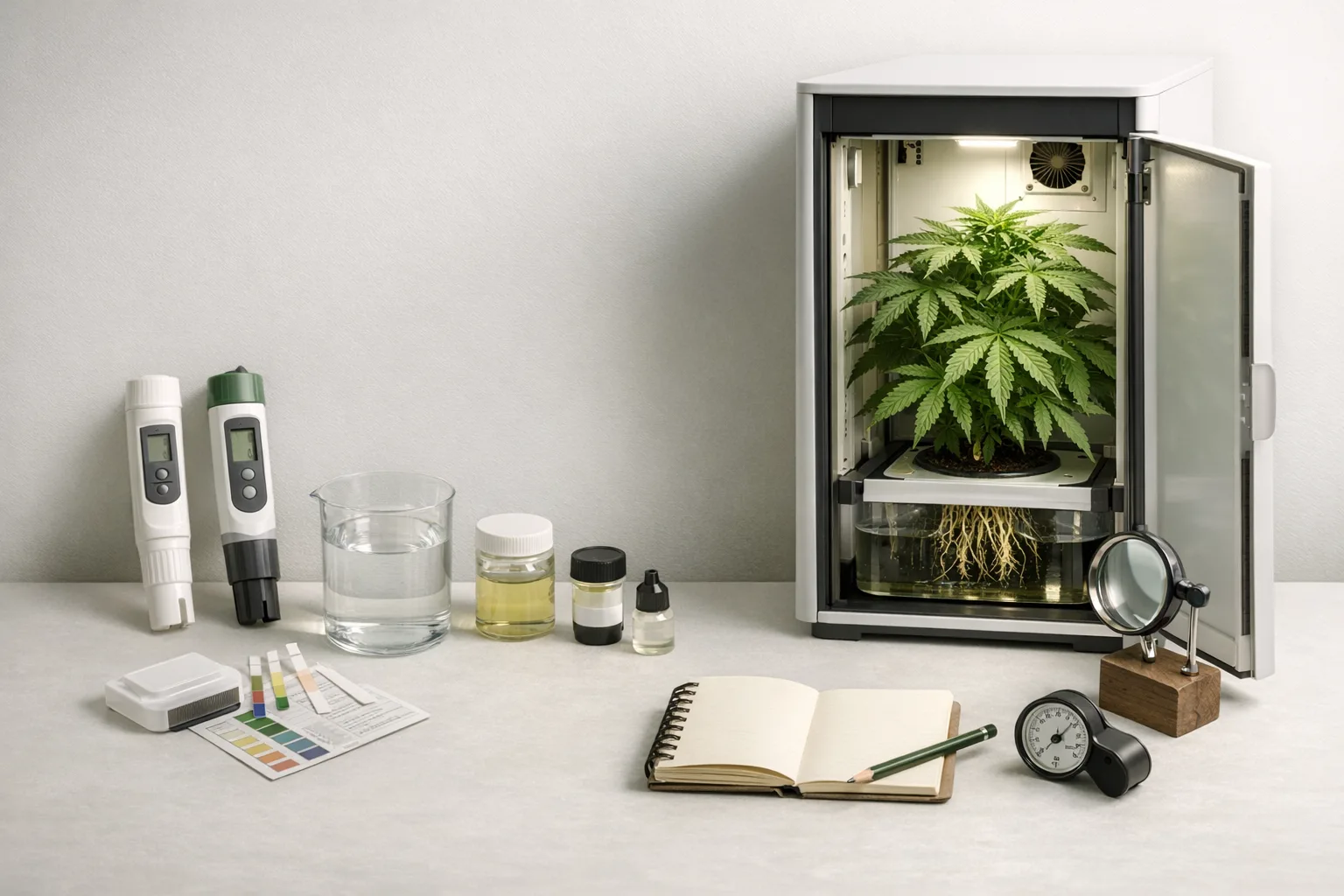
A daily cannabis grow checklist for a compact cannabis grow should focus on environment, reservoir behavior, plant posture, and obvious finish-stage changes. The goal is to catch drift early without turning the grow into a full-time vigil.
Good growers do not stare harder. They look for the same few truths every day and notice when one of them starts acting out.
A useful daily check does not require a clipboard fantasy. It needs a consistent look at the room, the root zone, and the plant so small problems stay small.
In a contained cabinet, you can usually see changes faster than in a larger, looser setup. That is one of the best parts of compact growing, provided you actually pay attention to the right signals.
Daily discipline is not about checking more. It is about checking the same useful truths in the same order so drift becomes obvious before the plant has to start shouting. That is especially true in a compact cabinet, where the room is small enough to read quickly if you are looking at the right things.
If the daily routine already feels bloated, the answer is usually not more discipline. It is fewer checks done better.
Check temperature and humidity first. If the room is drifting, everything else starts getting less trustworthy.
Leaf posture, color, and vigor usually tell you more than your mood does. Droop, clawing, or odd paling deserve attention.
Water level, smell, and overall cleanliness matter. A root zone should not feel mysterious when you open it.
pH and EC should be checked consistently, but interpreted as patterns over time, not emotional weather reports.
Heat and humidity swings create a lot of fake mysteries. Start here before you blame nutrients or genetics.
A healthy plant carries itself with a kind of quiet confidence. Sudden slouching usually means something changed.
In DWC, the root zone is not a side note. It is the stage the whole performance stands on.
The best daily notes are simple: unusual humidity, pH drift, noticeable thirst changes, leaf behavior, and anything tied to recent feed or environmental adjustments. Small records beat big memory every time.
If the same issue shows up two or three checks in a row, it becomes a real signal. One weird reading by itself is often just a moment.
Do not react yet to one moody afternoon, one slightly odd leaf, or one number that feels out of place without a pattern behind it. Do pay attention when the same issue repeats, when the reservoir starts smelling wrong, or when the environment drifts enough times to stop feeling accidental.
This is where pages like DWC Basics for Beginners, root problems in DWC, and the setup checklist help. If the daily read keeps looking flat instead of dramatic, compare the pattern with why growth is slow in a compact setup. A calmer setup creates calmer daily reads.